This past summer the Boston Busing/Desegregation Project had the honor of having international truth project expert Eduardo Gonzalez of the International Center for Transitional Justice speak to the Learning Network about Truth seeking projects. BBDP was inspired by truth-seeking processes around the world. We believe the Learning Network must learn about these processes in order to design one that works for Boston and for looking at the busing/desegregation era.
In his informative and fascinating talk and Q&A, Mr. Gonzalez addressed questions like: What is truth-seeking? Is it ever possible to “reach the truth” about social events? How do you achieve the truth in a social initiative? What is a truth commission? We invite you to listen to this talk and invite your questions and comments about it.
Part 1-What is Truth Seeking?
Part 2- How Truth Can Be Achieved in a Societal Initiative
We see the film Can We Talk? Learning from Boston’s Busing/Desegregation Crisis as a discussion-starter and nowhere near the last word. The voices in the film are the voices of those who convinced us that for some in Boston, this is an era we must return to and learn from . In terms of the diversity of individual and community stories that will need to be brought forth in a real and open truth-seeking process, these voices are just the tip of the iceberg.
Padriac Farma is a filmmaker from South Boston who has been working on a film that begins to capture the voices of his community about the busing/desegregation crisis and about South Boston in general. Padriac is still seeking people for his film that will be completed in segments over the next few years. He can be reached though his website at http://padriac.com/ if you want to be considered for an interview. This film is a labor of love that he’s been working on for over 10 years. A real truth-seeking process cannot be done without all voices!
With UMN’s film, the work of Padriac, and so many other amazing resources we’re discovering or envisioning as we do this project, the Boston Busing Desegregation Project can help Boston move beyond “ the single story” to an understanding of the era that includes its full diversity and complexity.
Welcome to the trial website of the Boston Busing/Desegregation Project. This website is still under construction but as it’s being developed it will provide information about the Project. Screenings/community discussions of the film Can We Talk? can be found here as well as information about other events. Unless otherwise noted all screenings are open to the public.
Once completed this website will provide background and updates on the Project. It will also include resources for the Learning Network. Your feedback on what’s here and your suggestions for the website’s development are most welcome! Thank you for your interest and support.
Busing. When I first heard the word in connection with this project, I flinched. I had talked to African American education activists who experienced the word as an insult at best, an assault at worse. For them, the term busing covered over the many decades of struggle for quality education for Black children and other children of color. Busing was a tactic that flowed from a strategy of desegregation of schools. And that strategy was one of many attempted in the mission to obtain quality education for all.
At the same time for many in South Boston and other predominately white working class neighborhoods, busing wasn’t a strong enough term. For them it was “forced busing”. They saw the armed protection of the children sent to their neighborhoods as a military occupation. For them, things were great as they had been and they were being forced into a change they never asked for and one wealthier white suburban communities could escape.
I resisted the term busing because it didn’t seem to speak to the true reality. But then when we talked to people who do truth processes worldwide, they extolled the power of having a word that ignites the feelings and understandings that are festering still and the reason we have undertaken this project.
Even for me, when I really took in the word, I was catapulted back to 1974–my first year living in Boston after graduating from college. I remembered having a bottle thrown at me and my younger sister in Kenmore Square or being spit at in my own South End neighborhood from a car near Prudential Center. I thought of how excited my mom still gets when she talks about getting lost in South Boston when they were on their way to see us up from North Carolina–their fear and how shocked they were when people were kind and helped them find their way. But most of all, I remember those frightened children and the angry adults throwing rocks at them and waving bananas.
So busing–as those helping to guide the process–is the word we have to feel about. But desegregation is the word we have to think about, study, come to understand. What did it mean for a city to try to grapple with a change that was made legally 20 years before the crisis here only to have it end with a conflagration rivaled only by Little Rock, Arkansas many years earlier? What did it mean for a society to move from legal segregation in education? What did our way of working through that influence the crises in education we face today. What can we learn? How can we use what we learn to bring change?
In this video by UMN intern Sasha Feliciano, some early supporters of the Project talk about why they think it’s important. (Note: this is not a part of the film Can We Talk?)

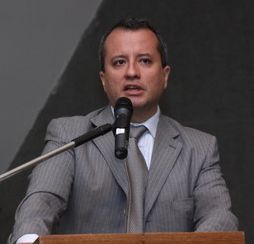 This past summer the Boston Busing/Desegregation Project had the honor of having international truth project expert Eduardo Gonzalez of the International Center for Transitional Justice speak to the Learning Network about Truth seeking projects. BBDP was inspired by truth-seeking processes around the world. We believe the Learning Network must learn about these processes in order to design one that works for Boston and for looking at the busing/desegregation era.
 Truth, Learning, and Change