Archive for the ‘Uncategorized’ Category

See the film that started it all! These were some of the first voices we heard – the people that inspired the Union of Minority Neighborhoods to start the Boston Busing/Desegregation Project. Inspired by these voices? We want to hear your story AND we have many more stories we want to share with you.

To tell your story email meghandoran@umnunity.org. We’re looking for stories of both people who were directly involved in school desegregation/busing and people who have experienced the impact.

We also need your support to share the stories we have collected. Please donate today to help us continue to broaden the voices that will lead to a new narrative about busing/school desegregation in the struggle for equity, access and excellence in Boston.
Red donate now NFG

In March, the Boston School Committee voted to change the way that students are assigned to schools. Donna and I followed this process closely and found that the most striking parallel between then and now is that parents and students continue to struggle for equity and quality, and school assignment continues to be an inadequate frame for addressing these concerns. BBDP learning network member Barbara McQueen weighed in in the Boston Globe:

For years, black students had been denied equitable educational opportunities. For the city and for individuals, discrimination and the violent response to desegregation efforts resulted in significant losses; for many, the traumatic effects linger. This legacy is an essential part of the back story to attempts to revise the student assignment plan.

The Union of Minority Neighborhoods’ Boston Busing/Desegregation Project aims to bring this back story to the front, and to continue the unfinished work of ensuring that all of Boston’s children have access to high-quality schools.

While Donna and I each read  statements to the Boston School Committee expressing concerns about the deep underlying issues brought to the fore by discussions of school assignment but rarely addressed and concluding:

As the 60th anniversary of Brown vs. the Board of education and the 40th anniversary of Boston’s busing/desegregation crisis approach, BBDP calls on the School Committee and all of us committed to race and class equity, democratic access and demands for excellence to take the risks we need to take to get them.

Reflection from our Brighton Story Circle – 2

Posted: March 20, 2013 by meghandoran in Uncategorized

After our story circle in Brighton we asked the folks who were there if anyone wanted to write up their reflections. Two people very kindly obliged us and we are long overdue in posting them. Here is the first, by Emily Berg:

Thoughts on the Brighton Story Circle

by Emily Berg

I dropped out of the sky into this meeting, having just met up with the Busing/Deseg History project, so I had no idea what to expect.  What I found was a group of maybe 25 people, of various ethnicities and ages, who brought and shared some delicious food and then stayed for 2 hours more to talk about their recollections and/or evaluations of that turbulent history.  And of course the discussion moved, at times, to broader issues related to racism and power, including immigration.  Due to the size of the group and the fact that we didn’t have all week, the topics raised could not be discussed in depth; at several points in the conversation, however, people spoke bravely and honestly about things that are so “touchy” that they don’t often get talked about.


A white man who had been a student at the time talked about the racial fights in school, saying that they were absolutely unavoidable, no matter how much you wanted to avoid them; he commented that he was at times “saved” by his Puerto Rican friends, because they were not seen as black or white.  He had gone to an integrated elementary school (the Trotter) and did not expect to have trouble – but he did.  Another white man, who had been a teacher at South Boston High, said the situation there was “a mess;” and that it was often impossible for education to go on.


A younger black man, at the time a resident of Columbia Point project, remembered his parents talking about the violence, and wondered whose fault the violence was: did it bubble up from below or was it created and led by politicians?  And is racism actually weaker now, or are racists just “more conniving?”  A white woman who was a school bus driver at the time noted that noise, of which there was plenty, does not necessarily equal chaos.  There was some back-and-forth discussion about Irish culture, or maybe cultures; an Irish-American woman said that she had been raised to fear South Boston and would never have dared to go there.  A couple of people said that immigrants – including immigrants of color – often seem to believe (and are they correct?) that part of becoming American is to “buy into” racism.


So many more things were said!  Several people gave little personal histories of their thoughts, feelings and actions during that time; perhaps a greater number said very little but listened closely (I was among them).  Many people brought the discussion into the present, by talking about how the past events (whether they were involved in them or just read about them) influenced their later life choices. 


The evening was at the same time fascinating, moving, and unsatisfying; it brought many questions to mind, and began to discuss a few but answered none.  The seriousness and honesty – and kindness –  people brought to the discussion was awe-inspiring and touching.  There will probably never be one united, accepted opinion about the busing crisis and its results, but there doesn’t have to be.  What we need is more talking and especially more listening; more conversations like that story circle.

Reflection from our Brighton Story Circle – 1

Posted: March 20, 2013 by meghandoran in Uncategorized

After our story circle in Brighton we asked the folks who were there if anyone wanted to write up their reflections. Two people very kindly obliged us and we are long overdue in posting them. Here is the first, by Naama Goldstein:

      Three weeks later, my 7-year-old son remembers, foremost, two testimonies: “the one about the ice cream shop and about not being served,” and, “somebody there was actually a bus driver—from busing!” I, his mother, remember worrying beforehand that to bring a child to the circle would be seen as a disruption. I wrote and asked. We were kindly welcomed, both by message and, later, in person. It was the first time that my son and I had entered the old church in Allston-Brighton; we are Jewish and secular. But our experience in this warm building on that frigid night was surely sacred to all people, of any religion and none.
     What do I remember? The potluck table, at first sparse, and then laden. We brought fruit salad, as did someone else, but the salads were made of different fruit. Eating together, then drifting to the round formation of chairs. The circle filling gradually. The facilitator’s melodious voice.
     The first contributor’s fervent blue eyes and wiry frame, which make it easy to imagine him before his hair had grayed, to picture him negotiating, as a boy, the routine violence that he describes, the swift calculations, the juggling of loyalties. The eloquent young woman, once a bused city child, whose suburban teachers slowed their speech for her, a daughter of parents with advanced degrees, immigrants working hard to begin again in a country where their erudition stood for much less than the brown of their skin. The young man pausing often to collect himself as he channels his father’s hurt, pausing the longest to search for a word—then finding it, “conniving”—to describe how the systemic abuse inflicted on his parents persists, underhandedly, now. The bus driver, a bubbly raconteur, searching as desperately, though in a steady rush of words, trying to analyze the clash of cultures that just happened to converge in absolutely the worst way on exactly the sort of vehicle she drove on the job she loved performing in service of all children, all sorts. My son shifting with fatigue on his adult-sized chair, and listening, watching, demanding to stay.
     But before these recollections I remember something else. As promptly as the images of ice-cream and a school-bus driver return to my son, to his mother the circle means, first of all, this: a woman, not far from my age, deep-voiced and soft-spoken, one of the earliest arrivals at the potluck and, I think, a parishioner here, projecting equal parts propriety and warmth, and working actively and well to make two strangers feel like dinner friends. At the story circle she is the same toward the whole room, both decorous and forthright, but anguished now, as she, too, searches for words, venturing to distinguish between her sort of Boston Irish, and the sort that she feels has tarnished the name. And I remember her later, long after her turn, demanding, graciously insisting that the circle come around to her again, so that she can say one more thing, which does not come easy, but that she is determined to say. This is no longer a searching but, rather, an effort, and once it is managed the message is plain: She is sorry. From her posture it appears that she is extending her apology to someone in particular, to the young man who sought and found the word “conniving,” and he is meeting her eyes. But she does not mean the message only for him, nor is she the only bearer. We are all taking equal part right now, even a little boy who will be able to recount more vividly some other moments, and certainly his mother, though I was nowhere near Boston in those pivotal times. I was a child growing up in Israel amidst other tensions that I must still work to confront. Well, here we are, now, in a church in Boston, where we live, feeling along with all those present the rare tension in the room, the sort of tension you invite, and hold communally, suspend together, all of us feeling and treasuring it for its brevity, in which we cannot clarify to whom apologies are owed, by whom, and for what, and it may be that apologies aren’t exactly owed, but they are needed, they are a start.

Naama Goldstein is a writer living in Allston
On February 28th. BBDP held the second pilot story circle at Charles Street A.M.E. Church.  Trina Jackson facilitated and another amazing space was created to share, listen and learn.  As Trina, Meghan and I were debriefing we couldn’t help notice how different the stories are depending on location and those present.

In Brighton, a theme of immigration and of  how ethnicity/nationality among white people shaped and impacts our history emerged.  At this one in Roxbury, stories of activism, of the impact of loving teachers and of the power of strong community were themes.

Another interesting thing, was hearing people tell stories who had attended the first one and returned for this one. Each circle evokes different stories for the individual and  for the collective and coming more than once can only deepen the experience.

If you, your organization or community is ready to sponsor a story circle, let us know.  Not only will you help BBDP but we’re convinced it will enrich you individually and collectively as well. Below are some of the short stories from the 28th (the first group includes stories of those who weren’t involved in the busing/desegregation crisis due to age and/or location. The second group is those who were here and involved):

So my experience in the BPS was having a community that taught me that it was okay to resist and rebel. Lisa Owens 

There was a Black teacher and I’d never expected to see a Black teacher in this white school. Trina  Jackson 

I learned English in six months because I was surrounded by complete love and I was completely focused on learning how to speak to my teachers. Sayra Pinto 

Her first experience with prejudice was here in teh NOrth. According to her experience, Boston was supposed to be the epitome of American ideals. Will Henry, Jr.

I would describe our experience as one of  political activism. Dolores Goode 

It almost didn’t matter where you were. There was a level of activism that was going on every where.  Jacqui Lindsay 

For me, the story was the level of Black activism there was in terms of resisting certain kinds of changes that were happening around integrating the schools and the real commitment to us taking control of the education of  our kids’ education. Curdina Hill 

photo
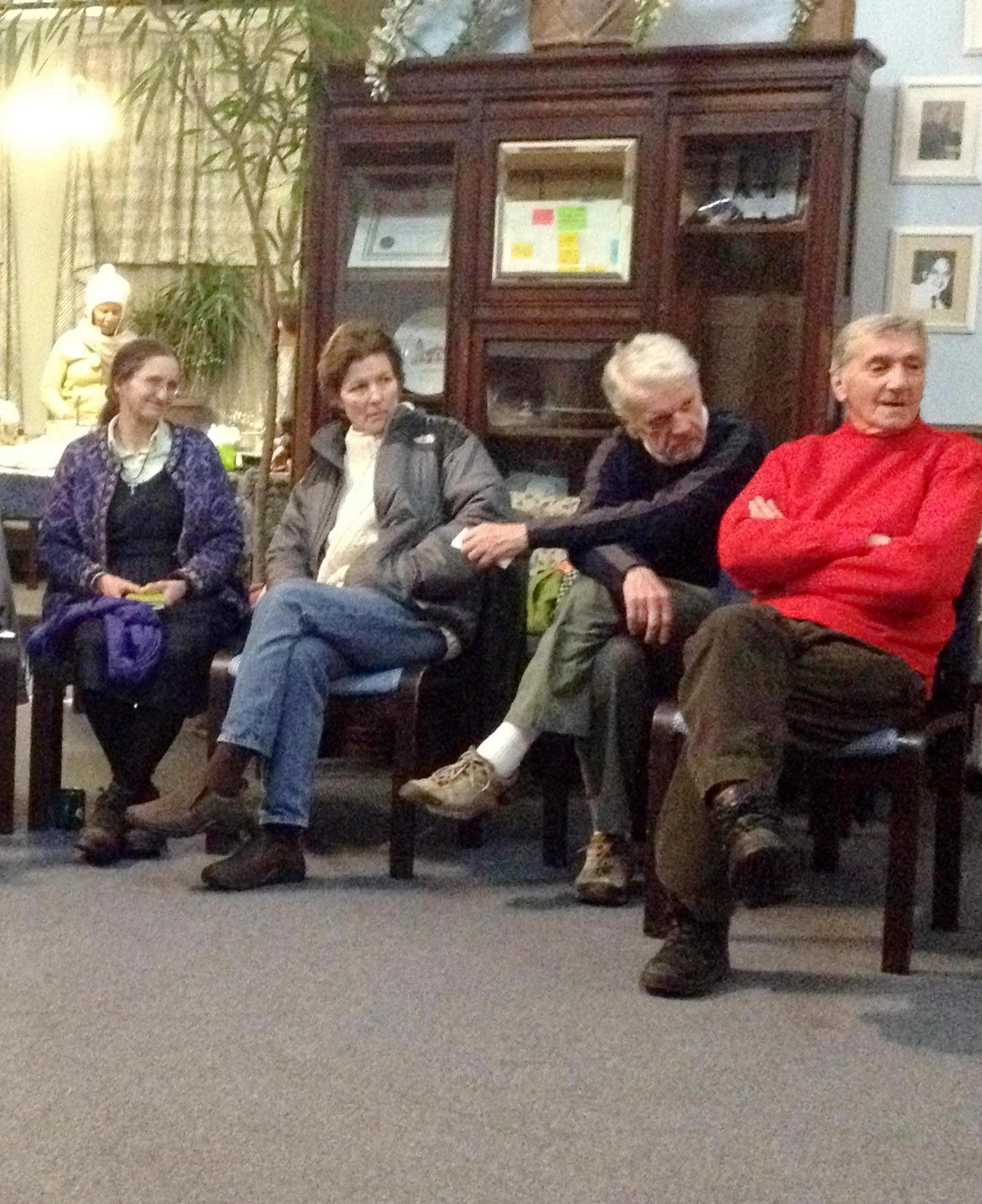
On a frigid night in February, twenty five people came out to be a part of our first official story circle at the Brighton Allston Congregational Church–a BBDP partner organization. It was a wonderful evening of listening, learning and building on the work of the first phase of the project.

Below are some of the voices from our first pilot story circle that made the evening so special. Your thoughts and stories in response are welcome and deeply appreciated.

As I saw the conflict, it was a cultural conflict and it was a struggle for resources—educational resources in the city. Armando Martinez  

I began to realize that there are structures for emotion—it’s not totally chaotic. Cassie Quinlan  

The thing I noticed about Boston was that from what I could see on the Boston University campus, it was a really white campus. It was  a really white city.  Ava Chan


I realized at one point that the Domino affect still runs through all of us.  Allentza Michel 

We also heard how bad it was in Boston..In Kentucky, we heard about how bad it was up here  – Trina Jackson .

 I wanted to find out a little bit more about the background that you feel as a newcomer that you didn’t experience directly. Naama  Goldstein and 7 yr old son 

ArtsEmerson invites UMN to a Special Performance

Posted: January 15, 2013 by Donna Bivens in Uncategorized

Beaty Hines

BBDP has found a wonderful partner in the Emerson College Community starting with our Steering Committee members Robbie McCauley and Gail Burton. This year we hope to deepen this partnership through work with  ArtsEmerson.  ( They will also be screening Can We Talk? this coming Saturday at 5PM ).

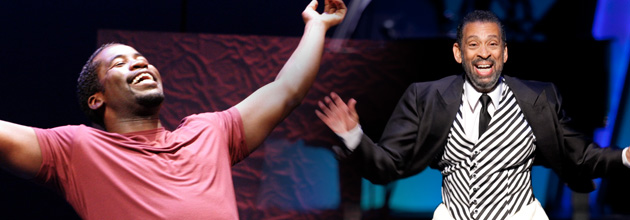
ArtsEmerson has invited the UMN community to a FREE evening of awe-inspiring entertainment with Obie award-winning actor Daniel Beaty and legendary showman Maurice Hines as they showcase pieces from their upcoming productions.  ArtsEmerson is presenting this special event on Jan. 22 at 7:30 PM that is free for all those who reserve tickets ahead of time: an evening of performances by Daniel Beaty and Maurine Hines This evening is part of an initiative at Emerson that seeks to engage under represented segments of the Boston community with arts at Emerson.

Tickets are free but reservations are required. Please click on the “Buy” button to reserve your seats. You will not be charged for your order.

Tue Jan 22 2013 – 7:30 PM Buy

About Daniel Beaty

Daniel Beaty is an award-winning actor, singer, writer and composer. He has received Lucille Lortel, Drama Desk, Drama League and Outer Critics Circle nominations, the 2010 AUDELCO Award for Outstanding Solo Performance and the 2010 Ovation Award for Best Male Lead Actor. He received the 2007 Obie Award for Excellence in Off-Broadway Theater for Writing & Performing and the 2007 AUDELCO Award for Solo Performance for Emergency. He is the recipient of the 2007 Scotsman Fringe First Award for the best new writer at the Edinburgh Festival.

Funnier than most serious plays and vastly smarter than most funny plays, Daniel Beaty’s Emergency is the most intriguing new show of the season. Its premise is inspired.” -Jeremy McCarter, New York Magazine

About Maurice Hines

Dancer, actor, choreographer, director and singer Maurice Hines has showcased his talents in a variety of settings, including Broadway, stage, T.V. and film. From the age of five Maurice and his younger brother Gregory performed as a dance duo. In 1986, Hines created, choreographed and starred in the musical Uptown…It’s Hot!, which received a Tony Award nomination for Best Actor in a Musical. Since that time, Hines has choreographed and directed numerous productions as well as music videos.

“Hines is the consummate showman… There’s a master at work here…” – The Boston Herald

Don’t miss these bold and brilliant productions!

The current phase of the Boston Busing/Desegregation Project is all about collecting stories both one-on-one and in a variety of group storytelling methods. We will be using interviews, popular education techniques, story circles and a number of other methods including old-fashioned community meeting to continue our truth-seeking process. On January 24 at Brighton-Allston Congregational Church  (register) and on March 7 at the Mission Main Community Center (register) we will pilot story circles that will link our individual stories with our collective struggle for excellence, equity and access in the public school system and the city. We hope all in the BBDP and the larger UMN community will attend and spread the word especially–but not exclusively–to those living now or during the desegregation years in these neighborhoods. W e especially encourage those who might be interested in facilitating circles to come to these two story circles. A schedule of others will be shared shortly.

Later in the year, we will have structured  intra-racial group explorations of the class and culture tensions that we must address to come to a collective understanding of our similarities and differences. These will include a diversity from each group–African, Asian, European and Latino–who want to take leadership in figuring our together how to  take  this discussion out into the many cultural groups/nationalities that make up these broad racial groups. We will look at each group’s specific historical struggles to

  • seek race and class equity to free their lives
  • Gain genuine access to resources and decision-making power that determine the quality of their lives
  • Demand excellence from systems and institutions that shape their lives.

Hopefully, this work together will take us another step towards BBPD’s goals:

 Achieving:

  1. Greater awareness of a more inclusive story about our past: the history that led to and followed Boston’s busing/desegregation crisis. This is shaped by previously excluded or marginalized voices and highlights the trauma and impact of the era that continues to exist in the city. It also includes public acknowledgement of an inclusive history.
  1.  A more inclusive history informs decision making today: about race and class equity, democratic access, and achieving excellence in the city and institutions that impact it. This includes making sure that lessons from history about these issues are considered as Boston re-vamps its school assignment process and designs and implements other reforms. This also includes raising awareness about the influence of larger political forces, such as corporate interests, impacting excellence, equity, and access today in public education, our city, and our society.
  1. A shared vision and action steps across difference to increase race and class equity, democratic access, and higher quality institutions. This includes a list of recommendations and action steps for moving forward, developed in collaboration with community partners and informed by our past, our present, and the future we want — for public education, our families, our communities, and Boston.

And contributing to:

Individual and collective learning, leadership, action, and advocacy across difference for policy, institutional, and community change to achieve the shared vision and priorities that emerge from working together to achieve equity, access, and excellence for all.

Please come and spread the word!

The Mountaintop

Posted: January 15, 2013 by Donna Bivens in Uncategorized

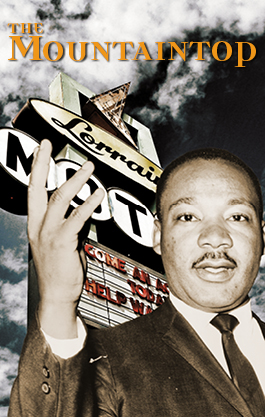
cstMT.265x417Union of Minority Neighborhoods’ BBDP and Community Change Inc. collaborated with the Central Square Theater by co-presenting at  the talk-back for the their new play  The Mountaintop this past Friday. The sold-out performance was both moving and thought-provoking  as we were invited to imagine that last night of Dr. King’s life.

Our wide ranging talk-back discussion touched on many issues: the nature of systemic racism, our images of God, our resistances to embracing the full complexity of our history, and our own barriers to “picking up the baton”.

The play is part of Central Square Theaters celebration of the 150th anniversary of the Emancipation Proclamation. It’s also a great way to celebrate Dr. King’s birthday. We highly recommend it and encourage you to attend and to use UMN’s promo code (UMN) to get a 10% discount.

Breaking the Cycle

Posted: January 14, 2013 by meghandoran in Uncategorized

As Boston’s attempt to change the way students are assigned to schools nears to a close, the Boston Busing/Desegregation Project continues to advocate that we carefully consider the lessons of the past through this process. If a recent article in the Boston Globe is any indication, there’s a lot more work that needs to be done to together to apply the lessons of this history to today. Of particular interest to us (not surprisingly) was this section of the article:

This patchwork — which, incidentally, costs millions each year to operate — is intended to give more students the opportunity to attend quality schools. It also reflects another, somewhat more antiquated goal: desegregation.

Before school busing in the 1970s, Boston had white schools and minority schools. But after four decades of white flight, that is hardly the case. The public school system is just 13 percent white. If you take the exam schools out of the equation, the percentage drops into the single digits. You couldn’t segregate the Boston public schools now if you wanted to.

That doesn’t necessarily soothe the fears of those who don’t trust the School Department when it proclaims its commitment to fairness. It doesn’t help that most of the district’s underperforming schools, to this day, are in minority neighborhoods.

Our gut reaction: we cringe to see school desegregation referred to as ‘antiquated.’ If schools continue to be racially and economically segregated (whether within public schools, between public schools and private schools or between the city and its suburbs) then it seems school desegregation is unrealized rather than antiquated. We’ve heard from many people involved in the struggle for equal quality education in Boston leading up to 1974 that school desegregation was a strategy aimed at bringing more quality and better resources to kids in an inequitable, segregated system. This leads us to see a continuity with our past, rather than a break with it: in the 1970’s parents were struggling to get the best possible education for their children, and they continue to do the same today. Today, just as then, there continues to be considerable inequities in the system, with struggling schools concentrated in areas that are highly segregated by race and class.

We take issue with the assertion that ‘you couldn’t segregate the Boston Public schools now if you wanted to.’  First, as the Globe article points us, there is segregation in the schools right now, with more kids with privilege having access to some of the highest performing schools in the system (especially the exam schools). Second, there is reasonable concern that a return to neighborhood schools could exacerbate the problems we are already facing in our system today: race and class inequities in education. There is a complex relationship between race, class and neighborhood in this city, one which, if we learned anything from the 1970s, we ignore at our own peril.

We know that the city’s External Advisory Committee has grappled with some of these issues, but we fear they haven’t been given the time, space or resources to do so in a meaningful way. At the Boston Busing/Desegregation Project, we are less concerned with how different or similar the city is today to the 1970s, and more concerned with a more pressing question pertaining to the past: How do we break this cycle? There are definitely some answers out there, but only if we go looking for long term solutions rather than short term fixes – another important lesson from the past.