
Looking Back

Posted: December 9, 2011 by meghandoran in Uncategorized

It’s easy in the day-to-day to get caught up in ‘what we’re not doing’ and ‘what we need to do.’ As we reflect back on 2011, however, we are reminded of how much we have actually done. Here are some of the numbers:

–          We formed a steering committee of 14 members with diverse interests, knowledge and skills that has become a core part of the project. Out of this committee we formed 4 working committees to engage in the day-to-day work of making the project a success.

–          We grew our learning network to about 500 people. We held 3 events for this network – a general meeting, a talk by sociologist Eduardo Gonzalez about truth commissions and a Courage Retreat inspired by the work of Parker Palmer.

–          We oriented 30 facilitators to the project to help us facilitate conversations throughout the life of the BBDP.

–          We premiered a 55 minute film , ‘Can We Talk,’ in which 12 brave individuals talk about their experiences with the busing/desegregation crisis. We have held 18 screenings of the film, engaging over 750 viewers in conversation.

 We could probably dig up more numbers for you, but the reality is that the numbers, as usual, don’t tell half the story. The real accomplishment of the year for us has been the learning and relationship building we have had the good fortune on engaging in.

We’ve spoken with parents, teachers, former teachers, students, school administrators, recovery program participants, adult basic education students, trauma professionals, artists, politicians, academics, clergy, residents of Roxbury, Dorchester, Brighton, South Boston, Quincy, Randolph … the list goes on and on. So many people have shared their truths with us and given us their thoughts and guidance. They have told us stories of pain and struggle and perseverance and desperation and love. Their honesty has at times overwhelmed us and always reminded us of why we do this work.

We’ve learned some valuable lessons as well. We’ve learned that talking to people can bring up trauma, and that we need to be ready for that. We’ve learned the history of a convent in South Boston and Protestant discrimination against Catholics. We’ve learned about the hard work of school desegregation activists before and since and the need to incorporate their stories. We’ve learned about the struggles of mother’s groups that were pro-desegregation. We’ve learned about the benefits and limitations of using film as a medium.

But we cannot hold these truths or learnings alone – a fact which propels us into 2012. Our hopes for this year include:

–  Continue to grow our learning network. Engage in more and regular dialogue with this network and facilitate more learning opportunities.

–  Work with different communities in the city to set the context for the busing/desegregation crisis. Ask the questions: ‘Who were we as a city before the crisis?’ and ‘How did we get there?’

–  Begin a process in which people within their communities share their truths and listen to and reflect upon the realities others have faced.

Although this is a lot to do and worry about, we feel confident that the solid relationships we have built and lessons we have learned over the past year will make it all possible.

As you’ are making your year-end donations, we hope you will consider making  a donation to  this work.  Thank you for your ongoing support.


Donna Bivens, Meghan Doran and Jacqui Lindsay had the honor of representing the Boston Busing/Desegregation Project November 3-5 at the seating of the first Metropolitan Detroit Truth & Reconciliation Commission on Racial Inequality. The Michigan Roundtable—the sponsoring organization —has been building toward a truth commission since 2008 through its examination of  the past injustices that led to the current state of racial segregation  in Metro Detroit. 

The seating of the Commission  commenced a fabulous conference called Race2Equity. The conference included international and local speakers who gave presentations on everything from the history of race and a place in Metro Detroit to explorations of truth processes around the world to how to write your own story.

Keynote speaker Naomi Tutu told us “Our story is our whole story. It all comes together leading to who we are today. That part that shames us and the part that makes us proud is our story. If we’re striving for justice and wholeness we must have the whole truth, the whole story. History can teach us if we listen to history.”

For those of us working on the Boston Busing/Desegregation Project it was inspiring and gave us new energy for our project for truth, learning and change. Over the next weeks we’ll be sharing some of the wonderful resources from the Conference on this blog.

Globe Article Explores BBD Project

Posted: October 18, 2011 by Donna Bivens in Uncategorized

On Monday, October 17, Boston Globe writer Akilah Johnson wrote another excellent article on the Boston Busing/Desegregation Project. This article and the one this past Saturday give an extensive overview of the Project.


An advocacy group hopes a community wide discussion about the past will improve the future of Boston schools – The Boston Globe.

BBDP Boston Globe Article

Posted: October 16, 2011 by Donna Bivens in Uncategorized

Adrian Walker of the Boston Globe dedicated his Saturday column to this Project. The article focused on the film Can We Talk? It gives a great overview of the film. It does not say much about the overall project and we hope if this is your first introduction to the Project that you’ll read up on the Boston Busing/Desgregation Project and become part of the Learning Network which is the growing community of people committed to making this Project a success and a gift to Boston.

Revisiting the legacy of busing, hoping to close old wounds – The Boston Globe.

Learning about Truth Projects

Posted: October 6, 2011 by Donna Bivens in Uncategorized
Tags:

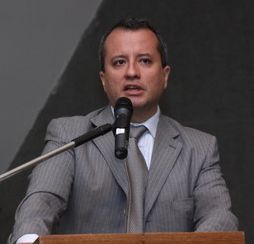
This past summer the Boston Busing/Desegregation Project had the honor of having international truth project expert Eduardo Gonzalez of the International Center for Transitional Justice speak to the Learning Network about Truth seeking projects. BBDP was inspired by truth-seeking  processes around the world. We believe the Learning Network must learn about these processes in order to design one that works for Boston and for looking at the busing/desegregation era.

In his informative and fascinating talk and Q&A, Mr. Gonzalez addressed questions like: What is truth-seeking? Is it ever possible to “reach the truth” about social events?  How do you achieve the truth in a social initiative? What is a truth commission? We invite you to listen to this talk and invite your questions and comments about it.

Part 1-What is Truth Seeking?

Part 2- How Truth Can Be Achieved in a Societal Initiative

Boston Beyond Single Stories

Posted: September 29, 2011 by Donna Bivens in Uncategorized
Tags:

We see the film Can We Talk? Learning from Boston’s Busing/Desegregation Crisis as a discussion-starter and nowhere near the last word. The voices in the film are the voices of those who convinced us that for some in Boston, this is an era we must return to and learn from . In terms of the diversity of individual and community stories that will need to be brought forth in a real and open truth-seeking process, these voices are just the tip of the iceberg.

Padriac Farma is a filmmaker from South Boston who has been working on a film that begins to capture the voices of his community about the busing/desegregation crisis and about South Boston in general. Padriac is still seeking people for his film that will be completed in segments over the next few years. He can be reached though his website at http://padriac.com/ if you want to be considered for an interview. This film is a labor of love that he’s been working on for over 10 years. A real truth-seeking process cannot be done without all voices!

With UMN’s film, the work of Padriac, and so many other amazing resources we’re discovering or envisioning as we do this project, the Boston Busing Desegregation Project can help Boston move beyond “ the single story” to an understanding of the era that includes its full diversity and complexity.

Welcome!

Posted: September 12, 2011 by Donna Bivens in Uncategorized

Welcome to the trial website of the Boston Busing/Desegregation Project. This website is still under construction but as it’s being developed it will provide information about the Project. Screenings/community discussions of the film Can We Talk? can be found here as well as information about other events. Unless otherwise noted all screenings are open to the public.

Once completed this website will provide background and updates on the Project. It will also include resources for the Learning Network. Your feedback on what’s here and your suggestions for the website’s development are most welcome! Thank you for your interest and support.

Busing/Desegregation: What’s In A Name?

Posted: August 26, 2011 by Donna Bivens in Uncategorized

Busing. When I first heard the word in connection with this project, I flinched. I had talked to African American education activists who experienced the word as an insult at best, an assault at worse. For them, the term busing covered over the many decades of struggle for quality education for Black children and other children of color. Busing was a tactic that flowed from a strategy of desegregation of schools. And that strategy was one of many attempted in the mission to obtain quality education for all.

At the same time for many in South Boston and other predominately white working class neighborhoods, busing wasn’t a strong enough term. For them it was “forced busing”. They saw the armed protection of the children sent to their neighborhoods as a military occupation. For them, things were great as they had been and they were being forced into a change they never asked for and one wealthier white suburban communities could escape.

I resisted the term busing because it didn’t seem to speak to the true reality. But then when we talked to people who do truth processes worldwide, they extolled the power of having a word that ignites the feelings and understandings that are festering still and the reason we have undertaken this project.

Even for me, when I really took in  the word, I was catapulted back to 1974–my first year living in Boston after graduating from college. I remembered having a bottle thrown at me and my younger sister in Kenmore Square or being spit at in my own South End neighborhood from a car near Prudential Center. I thought of how excited  my mom still gets when she talks about  getting lost in South Boston when they were on their way to see us up from North Carolina–their fear and how shocked they were when people were kind and helped them find their way.  But most of all, I remember those frightened children and the angry adults throwing rocks at them and waving bananas.

So busing–as those helping to guide the process–is the word we have to feel about. But desegregation is the word we have to think about, study, come to understand. What did it mean for a city to try to grapple with a change that was made legally 20 years before the crisis here only to have it end with a conflagration rivaled only by Little Rock, Arkansas many years earlier?  What did it mean for a society to move from legal segregation in education? What did our way of working through that influence the crises in education we face today. What can we learn? How can we use what we learn to bring change?

In this video by UMN intern Sasha Feliciano, some early supporters of the Project talk about why they think it’s important. (Note: this is not a part of the film Can We Talk?)

“Can We Talk?” in September

Posted: August 26, 2011 by Donna Bivens in Uncategorized

Mon., Sept. 12
6 pm to 8 pm
Boston Public Health Commission for Reach Coalition


Thurs., Sept. 15
6 pm to 8:30 pm
Civil Rights & Restorative Justice Project
Northeastern University School of Law


Tues., Sept. 20
5 pm to 7 pm
Askwith Forum
Harvard Graduate School of Education

13 Appian Way

Click here for panelists


Thurs., Sept. 22
5:30 pm to 8:30 pm
Boston YWCA
140 Clarendon Street

Facilitator Orientation in September

Posted: August 26, 2011 by Donna Bivens in Uncategorized

Wed., Sept. 14
9 am to 1 pm
Massachusetts Commission Against Discrimination
1 Ashburton Place, 10th Floor


Tues., Sept. 20
5 pm to 9 pm
Union of Minority Neighborhoods
42 Seaverns Avenue
(Jamaica Plain)