War on Poverty 50th Anniversary

Posted: January 12, 2014 by Donna Bivens in Uncategorized

mobius stripWith BBDP’s community-developed focus on race and class equity, we welcomed the recent War on Poverty 50th Anniversary and the opening it brings to lift up social class and wealth inequity in relation to the crisis.  As we listen to the stories of “then and now” so often class equity issues seems to lie just beneath the surface of people’s stories.  

People talk about the class dimensions of the changes in their neighborhoods, changes in public school access and the role and impact of private and charter schools without really mentioning  the concept of class that seems almost as taboo as racism in polite Boston company. As with race, as we clarify our personal stories in the context of our histories, we increase our collective ability to see the patterns that hold systemic inequities in place. One of my favorite quotes in doing equity work is from Michael Beckwith “Choice is a function of expanded awareness”. As the parallels between racial and class inequities and between struggles for racial and economic justice get clearer we expand our awareness. But those parallels must become links–or better yet a mobius strip with race on one side and class on the other–in order to really access and make new and better choices.

With  new, recommitted and emerging city leadership, most prioritizing race and class equity, democratic access and demanding excellence are hopeful that these issues will be named and engaged in creative new ways. Grounding in history and story is one such way. In the programs below–especially the Tavis Smiley program–the power of story meets history is evoked even as analysis and “data” are analyzed. We look forward to more of this and to bold links of race and class truth that brings real learning and powerful change.

Tavis Smiley round table the War on Poverty anniversary

Click logo: Tavis Smiley round table the War on Poverty anniversary

The War on Poverty, 50 Years On

The War on Poverty, 50 Years On

Learning from, Not Dwelling in History: 1974-2014

Posted: January 6, 2014 by umnunity in Uncategorized

Happy New Year! It’s  2014 and Boston begins a new era of leadership during this,  the 40th anniversary year of its busing/desegregation crisis. And all this takes place in a time when many are digging deep for new insights for the future that are grounded in knowledge and understanding of the past.

BBDP ended 2013 with some powerful story circles with people who work in and with Boston Public schools in different capacities and who are committed to public school education. A recurring theme is the critical need to learn from the past in order to discover a future that does not unwittingly recreate it. At the same time, we heard a need to be aware of and celebrate the strides that have been made.

There is something powerful that happens when people weave their stories together. Some things that are shared are difficult but people also touch the root of history that binds them to each other and to their every day lived commitment to create something different.

As we listen to the promise of possibility for the new Boston, let’s also practice hearing the wilderness cries that still stand between us and our becoming the city that works for all so many of us imagine and are working to make a reality.

History kind of follows if we don’t unpack it, if we don’t really investigate it because my mother again was a part of the 1974–she has this story about the rocks and I always thought she exaggerated until I learned more. Marcos 

We’ve got to step up our game but in the same breath how do we make people believe in the system? How do we get folks on board to acknowledge the past but change the future? Sue 

It’s funny how with trauma I can sort of block it out and then all of a sudden to hear that and it’s like “well, wait a minute, actually you did have that experience”… I think about history and I think  in the United States in general we don’t tell our history, we don’t tell our full history. Ben 
 When you’re in that system and you’re younger you don’t see the structural things that are at work, that are influencing what your everyday experiences are like so you just see things as they are and it’s hard to connect them to that history and to the structures that are shaping what you’re experiencing.  Anna 

Story Circle with Boston Community Leadership Academy

Posted: December 10, 2013 by meghandoran in Uncategorized

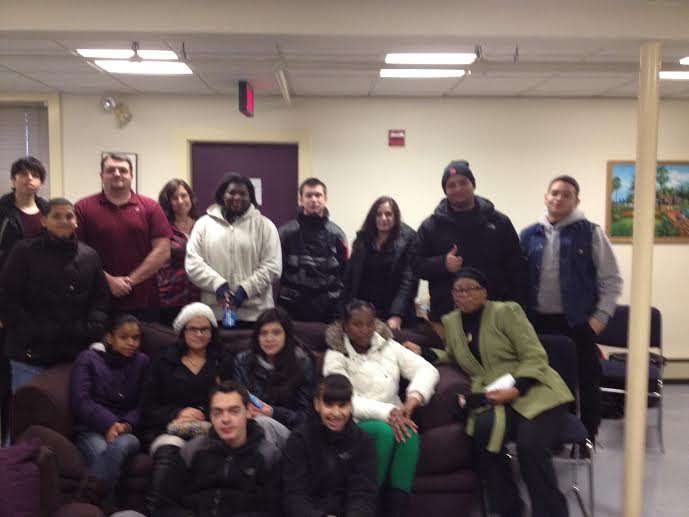
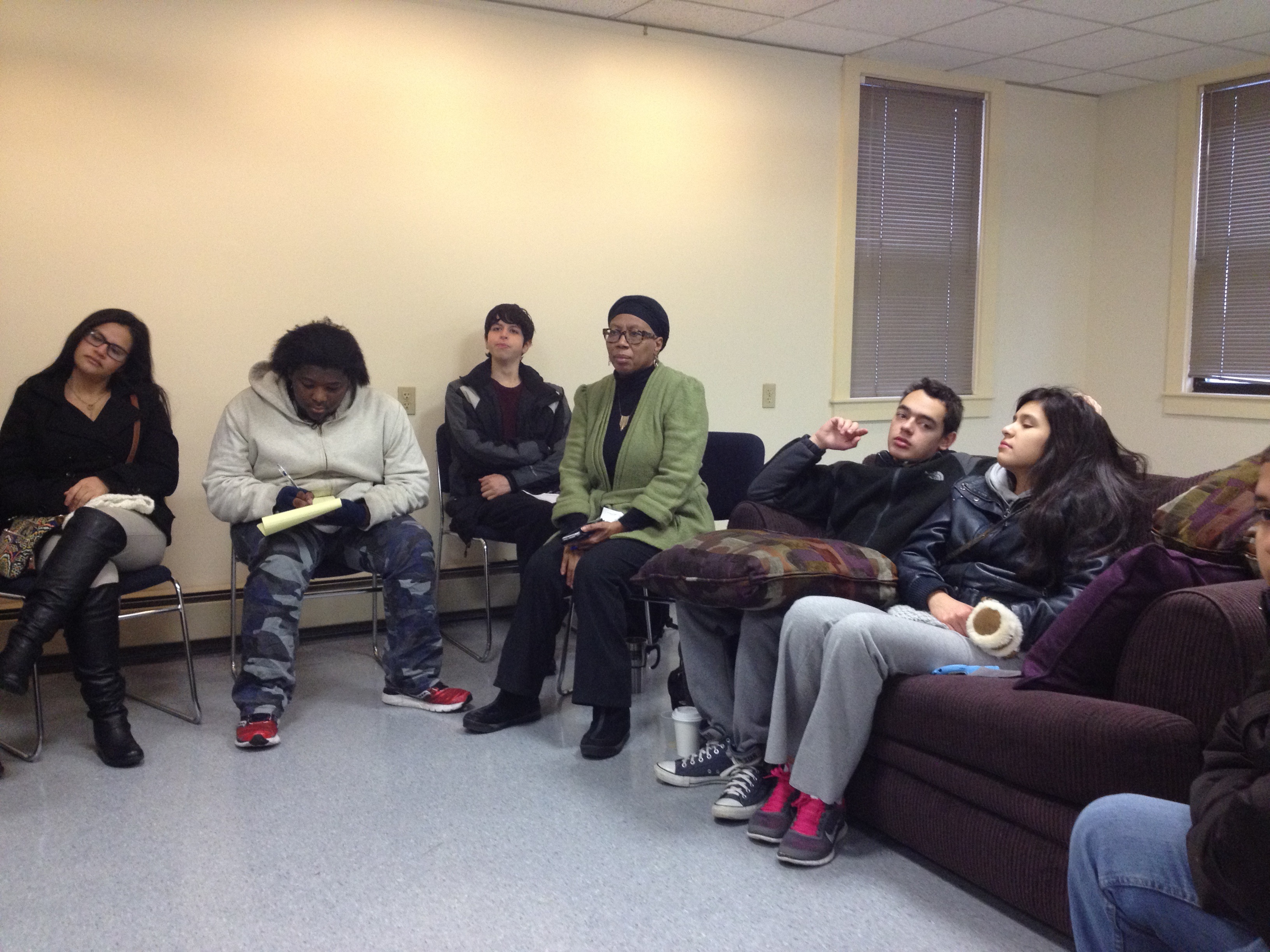
We had a wonderful circle with a group of young people from Boston Community Leadership Academy this morning. After watching the “Eyes on the Prize” the young people told candid stories about their own lives and experiences around race and education in the city. We had a wide ranging conversation about language, ethnicity, experiences of race and racism, and our relationship to history.  We look forward to working with them more in the future!

BCLABCLA2

BBDP Fall Presentations at Community Change

Posted: December 3, 2013 by Donna Bivens in Uncategorized

This fall,  BBDP has had several opportunities to participate in the  historical reflection that surrounds us as the nation marks significant anniversaries of the ongoing struggle for race and class equity. Community Change Inc. sponsored two programs that BBDP was part of.

The first featured journalist Gary Younge whose recent book The Speech tells the behind the scenes story of Dr. King’s “I Have a Dream Speech” given at the March on Washington for Jobs and Freedom 50 years ago this year. The book discusses the problem of oversimplifying the words and context of the speech and the march and gives insight that is very helpful for those seeking not to make the same mistake about our current reality.

http://www.youtube.com/watch?v=sfcnfmo16sQ

Gary is a fabulous story-teller and his fascinating talk resonated deeply with BBDP’s quest to gather the complex and diverse personal stories and collective histories that make the upcoming anniversary of Boston’s busing/desegregation crisis so vital. Donna shared connections to BBDP as part of the responding panel.

Also , Meghan and Donna ended up unexpectedly leading a discussion about BBDP at a Community Change Inc Brown Bag lunch.  In a first for us, the event was streamed live and at least one Learning Network member tuned in!


Educating the Eyes

Posted: November 12, 2013 by barbaralewis2013 in Uncategorized

Slave owners feared education.  They knew that an educated slave would not endure bondage.  Solomon Northrup used his education much like a sword.  After many trials, he finally cut himself free with his pen. Commentators are suggesting that this film represents a high-water mark in slavery’s cinematic depictions. Whether we are about to witness a spate of films about the twists and turns of slavery remains to be seen but the word is out that another British film will be released early next year which looks back at Britain’s complicated racial and sexual history. That film features a marriageable young woman named Belle, who lives on a country estate, far from the common crowd.  The story is informed by a portrait of a well-dressed young woman touched by tawny, as Thackeray wrote in Vanity Fair.  Looking forward to reviewing that also.

Slavery no Featherweight

posted by Barbara Lewis

I wasn’t going far, just one stop. On my way out of the door of the red line train, I was astonished. A large white feather was in my path. It seemed very much out of place. It was dazzling in its whiteness, very long, pristine. The quill was robust. The kind, it seemed, that might have been used to write documents before there was a fountain pen, a ball point, or a roller ball.

As I walked up the stairs to the exit, a memory flashed in my mind. About ten years ago, I visited the Trinity College Library in Dublin. There I saw illustrated pages from the Book of Kells, a multi-volume medieval manuscript. The care and beauty and coloring as well as the creativity of and investment in the ornate cursive transported me back to a time when writing was seen as a special talent, an art, a way of consecrating meaning and communicating beyond one’s present time to the future, even a kind of worship.

Seeing that feather made me think of another aspect of writing: its sometimes soaring quality but also the authority that words can wield, how they can make things happen, how they can bring realities into being. That is certainly true when we think of legal, religious, and political documents.

Sometimes documenting the personal can be groundbreaking and enduring, with far-reaching public effect. This weekend I went to see the film that was made from Solomon Northrup’s autobiographical narrative, published in 1853, a year after Uncle Tom’s Cabin. The Stowe novel was serialized, dramatized in numerous versions, and filmed, not once but at least three times. And that doesn’t count the cinematic reworking in The King and I. Nor does it count Thomas Dixon’s rebutting of the novel in his writings about the South, which were translated to film in The Birth of a Nation (1915), America’s first blockbuster. Then Quentin Tarantino turned Birth inside out in Django Unchained (2012).

Published a hundred and sixty years ago, Northrup’s story of being tricked out of freedom but working his way back into its embrace through long-suffering ingenuity is finally getting wide, international notice. His story and its cinematic treatment might be revolutionary, some are saying, likely to change the way we, in the 21st century, a hundred fifty years post Emancipation, think and talk about slavery, now that the post-racial era has dawned and there is a black man in the White House. Then there are others who laugh at the notion of post anything and say it’s going to be awhile before the American ship of state turns around in its wake and gets past its entrenched hierarchical habits.

Northrup, who is renamed Platt in the film, knows how to write, think, reason, plan, and solve problems. At first, he thinks that he can use his smarts to create a better circumstance for himself. On behalf of his first owner, a Mr. Ford, he figures out how to increase profits. Having an unduly smart slave on the premises is not a pleasant prospect for the plantation work boss, who decides to cut Platt down to more manageable size. They come to loggerheads and Platt ends up with a new owner, Mr. Epps. His wife is a very hard and vindictive woman but a virtual saint compared to her husband, who sees himself as lord and master of all he surveys, a virtual god. When it comes to the slaves, she is hawkish, ever on the lookout for transgression, and she suspects that Platt has more learning than most. He admits that he knows a word or two but assures her that he can’t really make sense of much when she sends him on a shopping errand. She warns him not to learn anymore because any slave that is literate would be severely punished for knowing and acting above and outside his station.

We see Platt looking at and carefully studying some blackberries. He is considering whether he can make ink from their juice. He decides to try. To create a writing implement, he whittles a twig to a fine point. His first attempt at writing with crude tools is unsuccessful. The ink is not dark enough. He is willing to try again, but he needs someone to post his letter. A potential friend is located but proves unworthy. Not one to give up, Platt makes a third attempt, but he has learned that the knowledge he possesses is too dangerous to reveal. So he figures out how to achieve his end through a proxy.

Slavery has been a school for him, and he has learned to survive in hostile circumstances, with violence and the threat of reprisal and punishment as constant taskmasters. The film makes clear that writing does not just happen with pen, ink, and paper. Skin is also a surface on which writing, leaving an impression, often permanent, can occur. Slavery, we see in this film, is etched and gouged into the backs and imprinted on the faces and bodies of the enslaved, male and female, with paddles, with whips, with fingernails, with thrown objects, with boot heels, with tightened nooses, and with the brutal force of bare hands. Blood was slavery’s ink, but unlike blackberry juice, it ran dark and thick and heavy on a regular basis, and it besmirched the whiteness it proclaimed.

It’s hard to imagine that the codes and practices of slavery were canonized and written into existence by anything as light as a feather and quill, but then dark deeds are sometimes construed as light and written into time’s book of ledger as natural, righteous, and in accord with the will of God and the law.


The Roots and Branches of Busing

Posted: November 12, 2013 by barbaralewis2013 in Uncategorized
Tags: ,

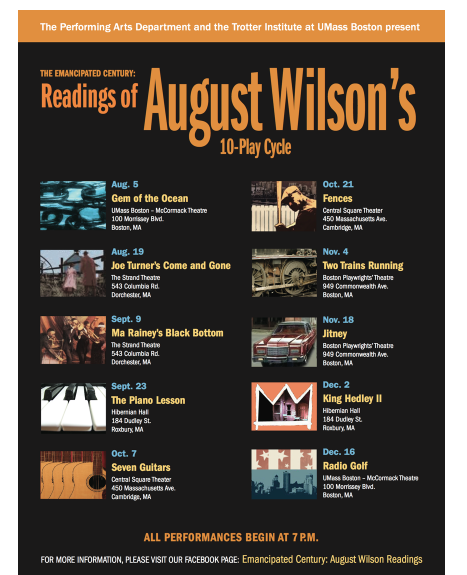
In Boston, we started pushing for educational opportunity in the shadow of the American Revolution, but we were rebuffed.  Since then, the education seekers have been pushed back, but still they keep coming and making progress inch by inch. August Wilson, the most important and ground-breaking American playwright of the 20th century, is a case in point. He had to educate himself because the schools had no place for his genius.  Teachers told him he didn’t have the skill to write a good paper so anything he turned in was the result of fraud and cheating.  Trusting himself more than them, he decided to teach himself to be a first-class writer, and he did that by relying on the greats who defied the odds, like he wanted to do.  Before he died in 2005 at the age of sixty, he completed ten plays about the spunk and vernacular pride of urban black folks.  His grand oeuvre, ten plays, set one decade after the other, pays tribute to the blues, Baldwin, Baraka, and Bearden, his four B’s.  All ten of his plays are being seen across Boston thanks to The Emancipated Century, which marks the 150th anniversary of the Emancipation Proclamation.  The last three plays of the series will be presented this month and next: Jitney, set in the 1970s and about the often tortured love between fathers and sons, will be staged on November 18 at Boston Playwrights; King Hedley II, set in the drug-infested 1980s, will be at Hibernian Hall on December 4; the series ends on December 18 with Radio Golf, set in the 1990s, which looks at the reclamation of historically black neighborhoods within the context of a mayoral run by the city’s first black candidate.

I wrote the blog below just after the series hit its mid-point with Seven Guitars:

Friday, October 11, 2013 • 12:04 PM Post a Comment

August Wilson’s 20th Century

posted by Barbara Lewis

“Hold up. You’re not done yet,” the woman in the corner told August.

“Who are you?” August asked, blinking.

“My name is Vera, and I belong in that story you’re telling,” she said. “That play is about me. You got it set right in my back yard, and you won’t be finished telling the whole of it until you get me right. So put down that glass of wine, put down that cigarette, and get back to work.”

This scene happened not in a play, but in real life. That’s what Benny Ambush, who is directing the October 21 reading of Wilson’s Fences at Central Square Theater, shared after the October 7 CST performance of Seven Guitars, which was greeted with resounding applause. Summer Williams of Company One directed that performance, which attracted a big house of over a hundred. Wilson’s ten-play cycle depicting the ups and downs of the 20th century from an African American perspective is being staged in five theaters across Boston, first and third Monday evenings through December, in tribute to the 150th anniversary of the Emancipation Proclamation (www.theemancipatedcentury.com).

Re-Visioning Tomorrow: Emancipation for a New Century is a companion program, a series of six public forums exploring themes that Wilson addresses, which still matter today. The sixth forum, scheduled at Boston Center for the Arts on January 13, is not drawn not from Wilson’s work, but from his life. When he was fifteen, Wilson left school after a teacher accused him of turning in a paper he had not written. It was too good, she felt, and a boy of his background was incapable of excellence. August Wilson left the classroom and went to the library. He would educate himself, and he was consistent in his devotion to learning. Not all the young men and women who are discounted because of complexion and circumstance are incapable of achievement. The education conundrum has not yet been solved, but it is key in Boston history. In the abolition era, for which Boston is well-known, a once captive community fought to extend educational rights and then in the 1970s, the schools in Boston were again at the center of the fray in the busing era. What educational legacy will Boston claim for the future?

August Wilson was a baby boomer, born in 1945 as one war ended and another accelerated. The second one, not usually referred to as a war, although full of fight and skirmish, was domestically enacted, and it continued struggles that had a much earlier beginning, going back, in the northeast, to the third decade of the seventeenth century, when a ship named Desire arrived in the Bay Colony with African bodies for sale. Those earlier times have passed and reconciliation is afoot. Through community dialogue, a new convening might render new insights and initiatives. That is the hope.

Back in the 1960s, when Wilson was a young man, he went shopping in a thrift store and bought a record. He took it home and its sound and message took hold. He listened to it over and over. On it, a woman was singing the blues, and her name was Bessie Smith. He was mesmerized. Her voice talked to him. He heard rhythm. He heard tale. He heard feeling. She told of history and living day to day.

After much trial and error, he became a playwright. He left his mother’s house in Pittsburgh and went north to another city. He started fresh in a place where he could create a different future, like his ancestors had done when they walked out of the south to create a new covenant of change. But he took grounding with him, and he studied and learned his craft, painstakingly.

His first play to sprout wings was about a woman recording a blues song. It wasn’t Bessie, but Ma knew Bessie, and gave her a start in the business before they parted ways. Ma Rainey, a southern traveling performer, recorded for Columbia in Chicago and knew her worth. As a public character, she was big and bold and outrageous, risqué. She sang about a dance craze that predated the Charleston, and she resisted the constraints that her manager and the studio boss used to control her. She was her own woman, and she found favor on Broadway.

Wilson wrote another play, which was about baseball, the segregated kind. Fences went to Broadway too, starred James Earl Jones, and earned Wilson a Pulitzer. A third Wilson play, about a man wrongly jailed and haunted by loss, also made its way to the star-making avenue. It was set in 1911. The big mama blues play was set in 1927 and the baseball play of a different stripe was set in the 1950s, when a quiet woman named Rosa bucked custom, a community campaigned long for change, and a boy named Till went to visit relatives in Mississippi and lost his life and his face for whistling.

Wilson noticed a pattern. He was setting his plays in different decades. Why not go all the way, he asked himself. He could write a play for each decade of the twentieth century, and, if he did that, he would be investing pattern and worth in a mold-breaking time, revealing trends and themes.

So he continued his push to Broadway, and a development circuit emerged, which included New Haven, Los Angeles, and Boston, among other cities. Then, early in the 21st century, he learned he had liver cancer. With months left, he used his energy to finish his last play, set in the 1990s, and retired his pen.

His suite of dramatic song expressed his individuality inimitably. No one could take that away. As he wrote in Joe Turner’s Come and Gone, his 1911 play, staying intimately attuned to the inner self and joining personal voice to others in harmony ennobled a life. Owning and commanding one’s song was the ultimate freedom, he believed, and Wilson, bard of a once captured people, dedicated his poetic genius to achieving that distinction.

Last year, as I puzzled over what to do to celebrate and mark Emancipation’s sesquicentennial in Boston, I immediately thought of Wilson. He had friends and admirers here. The Huntington Theater consistently produced his plays, and there were Boston actors and directors who knew his work intimately.

Besides, the book was not yet closed on Boston and its racial past of abolition and busing. What was going to be its new 21st century legacy? Revisiting Wilson, his words and his people, and taking both across the city to new as well as committed audiences might just set off a spark, might start a vigorous, healthy conflagration of change. So learning about Vera, the truth teller who would not be silenced and came forward from the dark corner of a room to let Wilson know she deserved her moment in the public ear and eye, was a welcome revelation. For me, it was a harbinger that history’s tale is not yet done and we, the wielders of the living hands that signify approval and ratification, have another role to play.

Busing/Desegregation across Three Generations

Posted: October 31, 2013 by Donna Bivens in Uncategorized
Mel King

Mel King

On Sunday, October  20, 2013, several of us from BBDP attended Mel King’s  85th birthday celebration and fundraiser for the South End Technology Center.  As we listen to stories from the busing/desegregation era, Mel King’s name is one that comes up often as one who struggled (and struggles) across differences for justice for all.

At the celebration, Mel shared many themes that relate to the stories we are hearing in story circles and interviews. He also shared  his mantra, “Love is the question and the answer”. In BBDP, whether we’re hearing rage or pain, hope or confidence in the stories, we’re hearing questions of love and how we love. Questions of how we include each other and maintain our sense of place, history and identity. And we’re coming to understand that real solutions will only come out of love. And not the syrupy kind of love but the kind Dr. King talked about is his famous quote:

Power at its best is love implementing the demands of justice, and justice at its best is power correcting everything that stands against love.

Over the summer as we were interviewing those directly involved in the busing/desegregation transition, Tufts University intern and BPS graduate Fabrice Montissol interviewed social justice activist and writer Mel King. Th result was a cross-generational conversation between two Black men.  We will work on the sound quality but hope you hear in it– as we did –many of the complexities of race and class equity, democratic access and demands for excellence BBDP seeks to better understand.

Fabrice Montissol

Fabrice Montissol

What will it take to make the transition?

Posted: October 30, 2013 by meghandoran in Uncategorized
Tags: ,

I’ll admit it – as a part of this work I’ve become obsessed Boston’s school desegregation crisis. Sometimes I think it’s just me, but then I realize, as much as we hate to admit it, it’s a part of our city’s culture to be obsessed with this history. It’s not that we’re all fine-combing every detail of the era – to the contrary, we talk about wanting to forget. But somehow it seems that we (and I’m speaking loosely here with the we) have to constantly measure ourselves against 1974.  Three recent pieces of writing have brought me to reflect on this.

The first was this article in the New York Times discussing the outcome of Boston’s recent Mayoral primary, in which it is noted that:

“Boston has a troubling racial history stemming from its fierce opposition to court-ordered busing in the 1970s to desegregate the city schools.”

The second was an article published in CommonWealth Magazine earlier this month describing the lack of people of color in business leadership positions in the greater Boston-area.  The article start comparing Boston now to Boston in the ‘70s and describing how much has changed in terms of race relations:

Boston has come a long way since the days of school busing in the 1970s. The city is far more racially diverse, with blacks, Hispanics, Asians, and other minority groups now accounting for more than half of the city’s population, up from less than a third in 1980. Signs of that diversity are growing. We have a black governor in the State House. Half of the 12 candidates for mayor in the recent Boston preliminary election were people of color. South Boston, the epicenter of the anti-busing movement, is represented by a black state senator of Haitian descent who is scheduled to host the city’s St. Patrick’s Day breakfast roast next year.

Finally, there’s Larry DiCara’s newly released memoir Turmoil and Transition in Boston: A Political Memoir from the Busing Era, in which DiCara apparently sets his political career in the 170s and early 80s against the backdrop of desegregation tensions.  (We haven’t gotten to read it yet – we’d love a guest review!)

This is just a sampling of recent references and comparisons to the era of school desegregation that has convinced me that it’s not me – the city seems to be continuously comparing the ‘new’ Boston to the ‘old’ Boston collectively (and has been doing so since at least 1985). Why do we keep returning to this era and measuring ourselves against it? I know I have my thoughts, but I’m also curious what others think.

Of course this is the spirit in which the Boston Busing Desegregation Project operates – we hear and talk a lot about how the city has and hasn’t changed since that era – but we’re also interested in helping move through and beyond such comparisons (think Transitions). Can you imagine a Boston in which we’re not comparing ourselves to the desegregation era anymore? What would it look like?

Seeing Systems: Exploring Stories and Histories

Posted: October 24, 2013 by Donna Bivens in Uncategorized
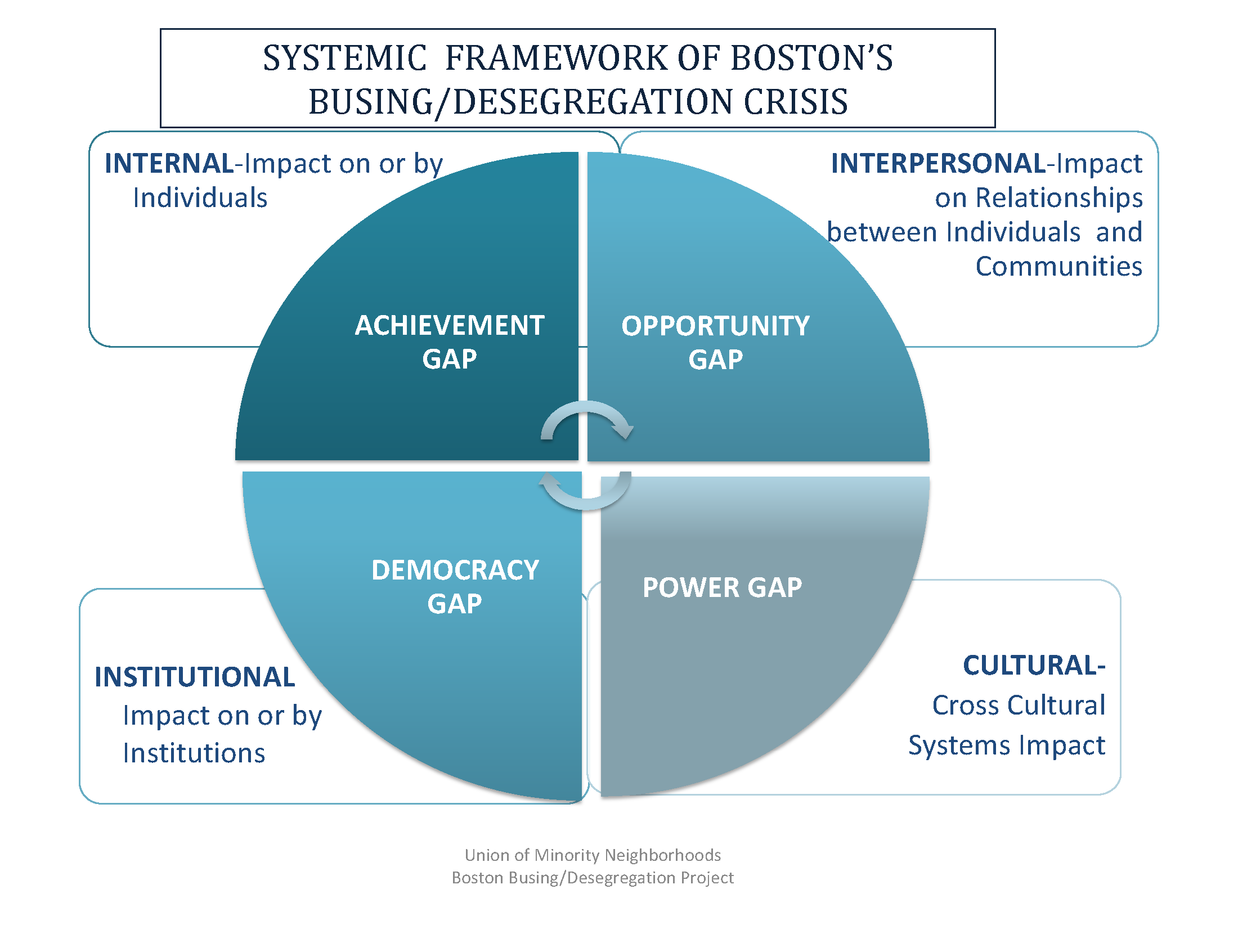
System3

Click picture to enlarge

When we first started the project, I was unsure about it but I didn’t quite know why. I knew it was that it was hugely ambitious,. That we were a small organization. That there was resistance to looking back on this past even though this history was very alive for many.  That there was so much I didn’t know. Now, though, as we prepare to enter the 40th anniversary year, I am beginning to learn what was at the root of my own ambivalence. That fundamental learning has been the complexity of the systemic nature of Boston’s busing/desegregation crisis— the history(ies)  that undergird it, the patterns that continue to repeat.  A lot of my work before coming to UMN was popular education largely focused on systemic oppression—especially systemic racism. Initially, I tried not to lead with models most familiar to me. I didn’t want to miss new understanding by imposing my own but I soon saw that using the lens of systemic oppression helped make sense of a lot of what we were hearing and seeing.  One of my best teachers, Malidoma Some, used to say that it often takes a simple model to help understand a great complexity. And I’ve found this to be true, as we’ve listened to and learned from those who have been on this journey with BBDP. In 2011, we adapted the “four dimensions” model of understanding systemic oppression* to what BBDP was seeing and hearing about the crisis and the public education system (see  phase one report). We created and shared the chart above as a way to sort the information and reactions we were getting to the Project and the relevance o f it that people were seeing (or not!). As we begin sharing and learning from the stories we’ve been collecting, it’s important for us to share our unfolding frameworks for understanding those stories and the current context in which we’re hearing them. One thing we’re clear on is that we don’t have the last word or any final solutions but BBDP as an effort is learning and has learned some things that need to be shared. Perhaps we should have been sharing them more consistently as things unfolded but we’ve tried not to put out our impressions as staff and leadership without doing as much listening, learning and reflecting as possible. BBDP will likely end up with more questions than answers and with more curiosity than solutions. But we trust that if as many of us as possible fully engage this material together we will end up with something valuable to the many people and organizations throughout the city who are committed to race and class equity, democratic access and excellence for all. We will deepen our courage to wade though the vast differences among us about what that means. * the idea of the “democracy gap” came from the Beloved Community Center in Greensboro, NC

The Emancipated Century

Posted: September 24, 2013 by Donna Bivens in Uncategorized

emancipated centuryNext year’s 40th anniversary, comes in the midst of many celebrations or markings of events that have to do with racial equity, of class equity and ultimately, of human equality. This year we celebrated the 50th Anniversary of the March on Washington for Jobs and Freedom.  Next year, will mark the 50th anniversaries of the Voting Rights Act and of Freedom Summer in Mississippi as well as the 60th anniversary of Brown v Board of Education. But one anniversary year has overarching meaning for those seeking race and class equity in the United States and that is the 150th anniversary of the Emancipation Proclamation.

As a celebration of this anniversary, The Emancipated Century is an inspired and inspiring program directed by Trotter Institute Executive Director and BBDP Committee Member Barbara Lewis. It includes staged readings of 10 plays by August Wilson each grounded in one of the 10 decades of the 20th century. It also includes 6 forums on issues covered by the plays. The premise of the Emancipated Century is that emancipation is a process, not something done once and for all. It touches all of us. The plays chronicle one People’s quest in the face of relentless resistance. The forums make deep connections to current realities. The presenters have been excellent and the discussions exciting. The last forum will be on education and this series will be a great link to the 2014 anniversaries: Brown and Boston.  We hope to see you at one or all of the remaining events in this series!

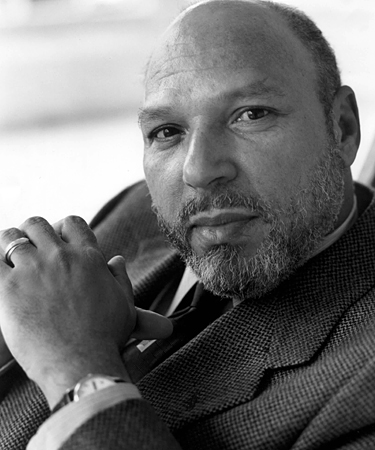
Playwright August Wilson

Playwright August Wilson

The next forum, Re-Visioning Tomorrow: Emancipation in a New Century, is this Thursday, September 26,  at the YWCA, Kuumba Library at 140 Clarendon Street at 6 pm. The next play is Seven Guitars on October 7 at 7pm at the Central Square Theater, 450 Massachusetts Avenue. All events are free and open to the public. For a schedule of all events click here.