Arts in the BBDP

Posted: March 27, 2012 by meghandoran in Uncategorized

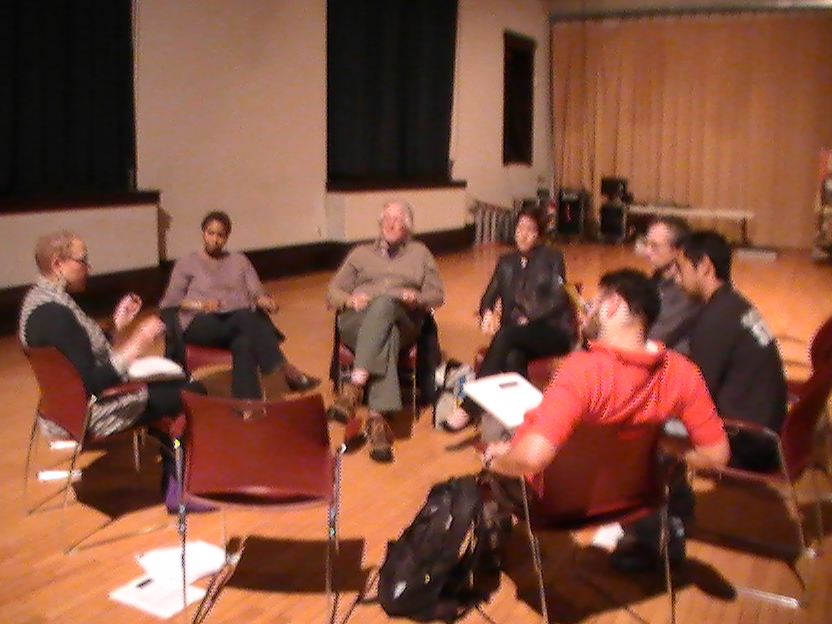
On Thursday March 20th we convened a group of artists to talk about how might use the arts to strengthen the BBDP at the Pozen Center at the Massachusetts College of Art. We convened this group with a strong belief that people learn, understand and communicate  in a variety of ways. For some of us reading about history may be enough, but for many others we need to ‘experience’ history on multiple levels in order to grasp its full power. At the same time people may benefit form having different media through which to tell there stories. At the Boston Busing/Desegregation Project we have a strong commitment to integrating the arts and artists into the work we do – we believe this will only strengthen our processes of truth, learning and change.

So many great ideas flowed as we talked at the Pozen center(notes from artists gathering). We walked away renewed in our belief in the power of story and storytelling, with lots of ways we might incorporate the arts as our project progresses. We can’t wait to work with the artists who came out!

March 15, 2012 will mark the 40th anniversary of the filing of the Morgan v Hennigan case. This case was the basis for the June 1974 decision by Judge Garrity that was so central to Boston’s Busing/Desegregation crisis.  In this complaint, Black parents and students sought “an end to racial discrimination, segregation and unequal educational opportunity … conforming … to the following principles:

  1. Achievement of the greatest possible degree  of actual desegregation;
  2. Inclusion of suburban school systems as appropriate in the plan for desegregation,  in order to achieve, now and hereafter, the greatest possible degree of actual desegregation;
  3. Utilization of all necessary methods of integrating schools including rezoning, pairing, grouping, consolidation of schools, use of satellite zones and transportation;
  4. Desegregation of the faculty and staff of each school in the system;
  5. Inclusion of a specific program for eliminating racial discrimination in the hiring of faculty, staff and administrative personnel, including methods for overcoming the effects of past discrimination;
  6. Inclusion of a specific program for eliminating discrimination in the allocation of resources in the school system;
  7. Inclusion of specific proposals for providing a racially non-discriminatory educational program
  8. Inclusion of a specific program for making available on an equal basis the opportunity for all children to participate in all courses, curricula and programs within the system.”

This case was from the perspective of  Boston’s Black community and came after its 20 year struggle to make real Brown vs. Board of Education’s promise of ending legal segregation.  While their principles addressed their own struggle against systemic racism they also reflect a desire for opportunity for all. As we were discussing this anniversary,  BBDP Steering Committee member Barbara Lewis called our attention to some recent demands that a group of young activists made in 2011 about public education in the South Bronx:

1. We demand free quality education as a right guaranteed by the US Constitution.

2. We demand the dismantling of Bloomberg’s Panel for Educational Policy. We demand a new 13 member community board to run our public schools (comprised of parents, educators, education experts, community members, and a minimum of 5 student representatives).

3. We demand quality instruction. Teachers should ethnically, culturally, and racially reflect the student body. We demand experienced teachers who have a history of teaching students well. Teacher training should be intensive and include an apprenticeship with master teachers as well as experiences with the communities where the school is located.

4. We demand stronger extra-curricular activities to help stimulate and spark interest in students. Students should have options, opportunities, and choice in their education.

5. We demand a healthy, safe environment that does not expect our failure or anticipate our criminality. We demand a school culture that acknowledges our humanity (free of metal detectors, untrained and underpaid security guards, and abusive tactics).

6. We demand that all NYC public school communities foster structured and programmatic community building so that students, teachers, and staff learn in an environment that is respectful and safe for all.

7. We demand small classes. Class sizes should be humane and productive. We demand that the student to teacher ratio for a mainstream classroom should be no more than 15:1.

8. We demand student assessments and evaluations that reflect the variety of ways that we learn and think (portfolio assessments, thesis defenses, anecdotal evaluations, written exams). Student success should not depend solely on high stakes testing.

9. We demand a stop to the attack on our schools. If a school is deemed “failing”, we demand a team of qualified and diverse experts to assess how such schools can improve and the resources to improve them.

10. We demand fiscal equity for NYC public schools: as stated in the Education Budget and Reform Act of 2007 by the NYS Legislature, NYC public schools have been inadequately and inequitably funded. We demand the legislatively mandated $7 billion dollars in increased annual state education aid to be delivered to our schools now!

In many ways these demands parallel the Morgan v Hennigan principles. Though from different cities and eras, when put side by side these speak to the systemic nature of our collective struggle for quality education. They represent  the cross-generational, cross-culture and class desire and work to clarify what we mean by quality education, to learn from what we attempt in search of it,  and to rethink our path to truly transformational change  base d on what we learn.

This spring, we will have an official marking of thisMoragn v Hennigan filing anniversary  in a Black community convening called The Black Context: Education, Equity and Excellence  to continue to get a sense of what we need to know from that community’s  perspective in order to really learn from this history.  We will also do a program at the Boston Bar Association to listen to their sense of the history and context for the crisis. We know this is just a part of the story though an important part—as all are.

As we learn from and hear the truth of various communities relationship to this crisis—their contexts, histories and cultures—we can better understand that era and its legacy today. We  look forward to continue to learn with BBDP’s ever-growing Learning Network  about these benchmarks in this history. There are a plethora of resources about this era that we are thrilled to tap but just as importantly, we must tap our diverse stories, perspectives,  and histories to get to the root of the history we want to move from and the history we must ground in to bring about real transformation.

Bringing the ‘Old’ and ‘New’ Boston Together

Posted: March 13, 2012 by meghandoran in Uncategorized

In a March 3rd op-ed in the Boston Globe, Lawrence Harmon made the case for changing school assignment in Boston.  In this piece he argues that Boston’s history, ‘the old guard,’ and race relations in the city all need to be left behind in order to ‘get kids off the bus.’ This is an argument we’ve heard plenty here at the Boston Busing/Desegregation Project, and one we continue to disagree with. We feel that any changes to school assignment need to be rooted in history and the complexity of relationships in the city, both old and new.

Harmon argues that the selection of Theodore Landsmark to head a 2004 process aimed at reconsidering school assignment caused “the specter of busing” to float “over the hearing rooms.” We submit that it was not Landsmark’s presence insomuch as the real experiences and concerns of parents and residents in the city which brought memories of the busing/desegregation to the fore of these discussions. Selecting a committee head who was not in Boston during that time period will not erase these experiences, though it might allow the committee to be less attuned to the historical reality. Likewise, excluding the ‘old guard’ of parent and teacher advocacy organizations (such as BPON and BEAM), only means these interests will have less access to the process, not that the wounds experienced by parents and teachers with a long-term investment in the system will disappear altogether.

Unfortunately, Harmon pits “delivering on the promise of neighborhood schools” against “getting bogged down instead in the city’s racial politics.” We believe that to actually deliver on the promise of high quality neighborhood schools, it is essential to understand and illuminate the city’s racial and class politics so that the people of Boston have a chance to free themselves from being manipulated by those politics, and, instead work across differences to define and create the high quality schools we all want.

What we found promising in his article is the following quote: “In a city where nine out of 10 students are minorities, the sensible goal now should be to ensure high quality schools that children can reach on foot. Tens of millions of dollars spent annually on transportation could be redirected to classrooms. And youngsters could draw closer to their neighborhood community centers, libraries, and sports leagues at the end of the school day.” This quote acknowledges that ensuring high quality schools should be the goal, not just neighborhood schools. This feels like important common ground with what the Boston Busing/ Desegregation Project has been learning.

Like Harmon, we are glad to see a racially diverse committee tasked with advising the BPS in the school assignment process. Rather than pit ‘old’ Boston against ‘new’ Boston, we believe it is critical to get to have a meaningful and historically rooted conversation about school assignment and, even more important, to build shared understanding with parents and other stakeholders across the city about what a world-class public education system for Boston looks like that takes into account excellence and equity for all kids and schools across the city. Central to this conversation should be the needs and voices of families who don’t have a choice about whether to send their children to the Boston Public Schools: some of these families are new to the city, while others are long-term residents with years of experience in the BPS. What they have in common is lack of resources and voice to secure a better education for their children.

In what so many are trying to claim as “the new Boston,” a Boston beyond busing and desegregation efforts of the past and present, families without resources and voice to secure a better education for their children look to and depend not only on the leadership of public schools and the city, but on all the rest of us to ensure that this time around, in 2012 and going forward, the needs, vision and priorities of these families, and parents themselves, are at all the tables that decide the fate of their children – i.e., whether their kids will be supported to have a chance at opportunity for all or consigned to fuel the pipeline of growing inequality and poverty in this city and country. We, at the Boston Busing/Desegregation Project, believe that building a first-rate school system that works for all is essential for moving families and communities out of poverty and building a better Boston; and that to get there, we need to ensure that a critical mass of parents who reflect the diversity of “the new Boston” are included and help lead a new conversation and citywide visioning and planning effort to provide their kids and all kids the best education possible.

– Written by Meghan Doran and Jacqui Lindsay

In a recent story for WGBH (which features Cathy Hennessy, also in our film,”Can We Talk”) Phillip Martin explores the changing neighborhood of Charlestown and the legacy of the busing/desegregation crisis today. What do you think? What else should we know about Charlestown’s story? What do today’s young people need to know about the busing/desegregation crisis?

Beyond Achievement: Schools in a Community Context

Posted: March 2, 2012 by meghandoran in Uncategorized

A recent report from the Boston Foundation suggests family poverty in Boston is a serious issue.

We’ve all heard of the ‘achievement gap’: that persistent difference between how white students and students of color perform on standardized test in the United States.  Recent studies, however, have focused on a different gap in achievement: this one between students from wealthy families and students from poor families. It may not be altogether surprising that wealthy students do better in school than poor ones. But the disturbing fact is that this gap has been growing over the past 40 years, even as the gap along the color line has shrunk.  At the same time, as income inequality in the United States grows so does economic segregation in schools.  The persistent gaps in achievement along race and economic lines suggest that economic inequity remains as relevant as ever, yet the path to narrowing these gaps and providing a quality education for all our children is continues to be elusive.

So how can we work towards educational equity? While we at the Boston Busing/Desegregation Project don’t pretend to have the solution, we do think past attempts to move towards equity hold some critical lessons for addressing racial and economic gaps in student achievement today.

First and foremost, we must recognize the community context within which inequality functions.  Attempts to address the achievement gap often focus on getting students, schools and families to do better.  Students, schools, and families however are embedded in communities, cities and regions. In Boston we have seen how communities act and react to issues of educational equity, how resources can be differentially allocated between communities and how there is a further differential in resources between the city and its suburbs. This whole system encourages some students to thrive while forcing others to struggle.

Yes it is important to focus on ‘the achievement gap’ and find ways for everyone to do better. But there are other gaps which are equally important in impacting the ability of young people to succeed. One such gap is what’s called a ‘democracy gap’ – where some individuals, neighborhoods, and towns have access to government and strong voices while others face exclusion. This is a major goal of the Boston Busing/Desegregation Project: to give voice to those that have traditionally been excluded due to race and class inequities and learn from their experiences.

We are constantly faced with the question of what we can learn from the past when the city has changed so much. Indeed demographics have shifted, schools have been updated and the city’s economy has been remade.  But the gaps are still there beneath these changes, and not just in achievement but in access and voice. Until we close the democracy gap in our communities, city and region, it is unlikely education will ever be ‘the great equalizer’ it was intended to be.

Why Look Back?

Posted: February 7, 2012 by Donna Bivens in Uncategorized

With the passing of former Boston Mayor Kevin White, it was clear that there is still much energy and passion when Boston reflects on our busing/desegregation crisis.  There was hardly an article or report that didn’t mention this era and the profound impact it had on Kevin White’s legacy and the city.

One refrain we heard on the Callie Crossley Show about Kevin White’s passing  was “we don’t know this history”.  Names and events that had a huge effect on the city were clearly new to many who were not here then—or even to some who were.

As we do this project we are often asked, “Why go back”. Many say it’s important to go back because if we don’t know the past we will repeat it.  This is a huge reason for looking at our history. What happens when inequity runs rampant? What happens when a decision is made for all that fails to find and address the wisdom or kernel of truth in marginalized voices and communities?  What can we learn about democracy and about systems change by looking at the gains and failures of that time?

When Detroit seated a Truth Commission to look at its history of racial inequality, one of the panelists, Professor Thomas Klug,  addressed the “why go back?” question by saying that history is a sixth sense. If we don’t understand what the history was that got us here, we think the status quo has always been. We don’t understand how our current reality was put in place and so we cannot imagine that we can really make change. This is another reason to look back: the trials of that time –especially racial and economic segregation and inequities  in public education and the city—continue to haunt us and only by understanding how we got here can we really make systemic change.

A third reason for looking back can be summed up in the picture above (click for larger view). It is a simple model by William Bridges for understanding complex change. The goal of our change was quality education for all regardless or race and class. Desegregation was one strategy for reaching that goal. And “busing” was a tactic that tried to push Boston through its resistance to that strategy.

The transitions model cautions that often we think change is going directly from the old to the new. We forget the stages of making a true ending, entering a transition period of trial and error, and allowing new beginnings to emerge from what we learn. Too often, we want to move past the emotion and trauma that often accompanies change.

Moreover, there is a “marathon effect” in which some are reaching the finish line before others have heard the gun as happens here every Patriots day! Some have certainly moved past the traumas of that era, some are enjoying economic and racial well-being. But many are not. We have not heard the full stories of those for whom the just “ending” has not come or who are still caught in the legacy of that era.

Boston has the intellectual, spiritual and material resources to look back and learn. We can make the changes that can lead to the highest quality public education system and to race and class equity in the city. Kevin White couldn’t do that for us. No one man or woman can. But our city together can –and needs to– do it.

Can We Talk?: Learning Communities’ Contexts

Posted: February 7, 2012 by Donna Bivens in Uncategorized

What was happening in Boston’s neighborhoods at the time of the Busing/Desegregation crisis? What shaped each cultural community’s response to it? In what history were those responses grounded? How does that history continue to impact us now?

In the coming months, in addition to screenings of Can We Talk? the BBDP will be holding cultural/neighborhood gatherings to learn what their historical and social contexts were for the busing/desegregation crisis. We know we cannot address what happened in Boston in the period of 1974 – 1978 until we have some  understanding of the political, economic and social context that led up to the crisis. Rather than only looking to the books, we are inviting the city to co-create this history with us by asking people to tell us what was happening in their communities before the crisis and what the crisis actually was from their perspectives. We will culminate with a city-wide gathering in June to look at, share and build on what we’ve learned.

In a two-part event on January 24 and 31, we piloted this process at the historic Freedom House in Roxbury. About 30 people came out on each night to see clips from the film, hear a panel and explore context and present day impact in small groups. The panel was moderated by Barbara Lewis, Director of the Trotter Institute and included Sherry Brooks-Roberts, retired BPS teacher and administrator, Margaret Burnham of the Civil Rights and Restorative Justice Project at Northeastern School of Law, Matthew Goode, a native Bostonian and educator, and Deborah Washington, RN, of Massachusetts General Hospital.

The panel was followed by lively discussion in small groups and very insightful feedback. For example, we were struck by how people talked about their communities then, as being energetic and change-oriented,  where they talked about today with more concern and apprehension. We were equally struck by the emotion people still feel when discussing the era. We also noticed how people put the crisis of the schools in a much larger context of community, housing and history. Finally, we found that people were both anxious to learn about other communities and to have other communities understand their own experiences. You can see notes from the event and view the panel below.

Working towards Equity and Excellence

Posted: February 2, 2012 by meghandoran in Uncategorized

You can imagine our excitement when we came across this article by Michelle Morrissey referencing our project in the Huffington Post.  Even more exciting for us than the link is the fact that Michelle is taking the time to teach Boston students the history of the city’s busing/desegregation crisis, while most BPS students learn about school desegregation through studying Central High School in Little Rock, Arkansas (thus perpetuating the myth that desegregation struggles are solely a southern problem).

As Michelle mentions in her article, we got a chance to show “Can We Talk” in her classroom, and received some amazingly insightful feedback from those young people. They commented on the fear and frustration they heard in the film. Many were surprised by how education and the actual experiences of young people became secondary during the crisis.  They were also eager to both hear other voices than weren’t included in the film and extend beyond personal stories to think about the systemic issues

Whether you agree with Michelle’s perspective or think education reform needs to go in some other direction, we hope that you will join her, her students and the many other people we’ve reached out and have joined us in thinking about how we can learn a lesson from the busing/desegregation crisis that helps us move forward. For us, this means at the very least holding up the importance of equity and excellence in every decision we make as a city, state, and nation about the education of our young people.

Boston to Revisit School Assignment

Posted: February 1, 2012 by meghandoran in Uncategorized
Tags:

In his January 17th ‘State of the City’ address Mayor Menino vowed  “that one year from now Boston will have adopted a radically different student assignment plan – one that puts a priority on children attending schools closer to their homes.” This assertion has raised a lot of questions for us at the Boston Busing/Desegregation Project – questions that we’d really like to hear your thoughts on. From our perspective, any discussion around changing the school reassignment plan needs to be grounded in a deep understanding of the historical context. What do you think?

–          How does the context of the busing/desegregation crisis impact the way residents in Boston think and talk about school assignment?

–          Does the context of the busing/desegregation crisis impact the way you think about school assignment? Why or why not?

–          What lessons can we take from the busing/desegregation crisis as we rethink the way students are assigned to schools today?

Post your thoughts on any or all of these questions here or email them to meghandoran@umnunity.org and if we get enough responses we will get back to you with a summary.

Reflections on the BBDP

Posted: December 14, 2011 by meghandoran in Uncategorized

We asked some of our committee members to reflect about their relationship to the project. Becky Shuster and Paula Elliott replied.

It surfaces again and again: our city’s still open wound from the history of busing and school desegregation.  I moved to Boston as a young adult in 1983, years after the crisis.  But as anyone who is active in anti-racism work in Boston will tell you, the pain around that history is always apparent when we try to tackle these issues.  Whether I am facilitating a dialogue session on race through YWCA Boston or simply inviting an out-of-state African-American friend to visit, the history of busing in Boston comes right to the fore.

So, when Horace Small first mentioned his idea to me – a profound and innovative idea to endeavor to address that history – I was immediately on board.  I am honored to be a member of the project’s Steering Committee, and co-chair of the Program Committee charged with guiding the design and facilitation of various discussions and training sessions associated with the effort.

The Massachusetts Commission Against Discrimination hosted one of the fall film screenings to get the word out about the project and open the conversation.  Over seventy people turned out to be a part of it.  You could feel participants’ eagerness to learn about and/or remember the details of what happened; to face the impact of those events on individuals, education, and the city; and to begin to figure out how to move forward together.

As the mother of a Boston Public School first grader, I can only imagine what the implications of this process may look like.  Can we create the quality and quantity of opportunities that are needed to truly recover from the history of busing, and to deeply listen to the effects on so many lives?  Will more parents of color, particularly African-American parents, feel able to fully engage in efforts to transform our schools?  Will we gain a more accurate assessment of where we are around racism in Boston today, rooted in the realities of the present rather than either the pain or the denial from the past?  I look forward to finding out.

Becky Shuster is on the Steering Committee for the Boston Busing Desegregation Project, and is  the Director of Training for the Massachusetts Commission Against Discrimination. She lives  with her family in Hyde Park.

_________________________________________________________________________________________

As a BBDP Learning Network Planning Committee member for over a year, the public gatherings, impromptu phone calls, readings, and discussions have routinely provoked reflection about my motives and expectations for involvement.   The time and energy as a committee member is not inconsequential, so why do I continue to be invested? An easy answer to how I got on board was my long-time regard and respect for Donna Bivens, the project coordinator.   Her leadership gave me confidence that the perspectives of participants would be listened to and respected.   You can’t always assume that to be the case when people try to do their part as a responsible citizen and community member in this town.  That confidence continues to stoke my energy as other reasons sustaining my intellectual engagement and emotional investment emerge.

For many years in my professional and personal life, I have been driven by a deep concern for the quality educational experiences available to children and families in urban schools.   I am a third generation African American educator and proud of my family legacy. I come from women and men who worked tirelessly in support of assuring an education so  children could have real choices through out their life,  know how to make responsible decisions, and  share their unique gifts in ways that affirm life affirming possibilities with others.  I come from folks that were active in the struggle for civil rights, so I make a point to continually revisit that history and look for ways to make use my skills and talents for similar purposes each day.  I particularly love to seek out and hear the stories of teachers, the history and wisdom they bring to and from their work in urban settings.  So the work with BBDP and the folks that come to the project lines up quite nicely with familial legacy and personal passions.

As I continue to seek out more of my family history I always assume that everyone around me has a legacy that can be a source of strength and purpose in their lives.  Whether they have taken the time to learn about it or not, I assume, if they choose to, they can use the lessons from their life and legacy in ways that contribute to the larger good.   So again, the Learning Network, the space from which people can explore, share and reflect on their life experiences with Boston’s schools, fits comfortably with the insights others can bring to the table.

The assumption of this project  that  other’s voices should be solicited and counted in the master narrative also increases the likelihood that I will confront folks that will contradict and challenge my long held beliefs. So sustained involvement in BBDP means I will get practice in hearing and responding to, ideas and attitudes that I want to push back or dismiss. I am good at pushing back when I think it is needed. At the same time to do so, without really trying to listen and understand what someone else has to say, is problematic, can be irresponsible, and can diminish some else’s ways of being, make them lose face; that ain’t right.

The folks I have seen in this project appear willing to listen and learn as best they can, no matter what comes up.  They also want to make sure any one who wants to participate feel listened to, respected, and be feel they can take away meaningful learning from their experience.  That’s a really good thing, especially talking about the history of Boston’s schools in the context of tumultuous dynamics of race, class, and longstanding beliefs about the sanctity of their neighborhood turf.

I hope sharing some of the beliefs and values sustaining my connection with BBDP will encourage others to find their own good reasons to do so and join us for this long, meaningful and important journey.
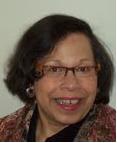
Paula R. Elliott, Ed.D., is currently active in community-based social justice initiatives. She is a creative resource and consultant with schools, teacher development initiatives and non-profits on issues of equity and inclusion in urban education, community services, arts education and the production and presentation of artists and cultural workers.