Archive for the ‘Uncategorized’ Category

We are excited to announce that the Boston Busing/Desegregation Project’s first film Can We Talk? Learning from Boston’s Busing/Desegregation Crisis was accepted in the Roxbury International Film Festival. This film by Scott Mercer of Mercer Media Relations has been core to the project. It was key this past year to opening up conversation about the period and inviting people and communities into the project.

Our festival screening is scheduled to be held at Blackman Auditorium at Northeastern  University on Saturday, June 16 at 3:15pm. The festival  lineup  sounds great! We hope to see you there. Hear director Scott Mercer discuss the film and the Project on WBUR.

How can we integrate public schools when neighborhoods have become more segregated? Is it time to bring back busing? What other options and solutions are out there for providing a quality education for all children? These are the questions the New York Times posed this week in its Room for Debate section. Along with Pedro Noguera, Michelle Rhee and others, BBDP Project Director Donna Bivens was invited to weigh in. Donna originally submitted a piece outlining some of what we learned at the National Coalition on School Diversity conference last week, but was asked to  submit a more personal narrative. We liked the original piece so thought we’d share both with you.  Click here to read the piece published in the Times and see below for the original submssion.

____________________________________________________________________________________________________

In Boston, we’re beginning a process to seek truth about and learn from our 1970’s “busing”/ desegregation crisis. We’re seeking to better understand what worked and what didn’t work and for whom. Wha twe’ve found is a tangled web of race and class, power and values that didn’t get—and couldn’t be—sorted out back then that continues to haunt us and pull us back today.

There are some important lessons that we can learn from earlier attempts at school integration. Here are a few things we’re exploring in Boston. First, for some integration is only one tactic of many to achieve the goal of quality education for our children. For others, integration is in and of itself a value and goal. And for still others, it is something they fear deprives them of value, meaning, control, or even community. It is important in our discussions about how to achieve integration that we are clear about why we are striving for integration, what outcomes we are seeking and how we are tending each other across our differences.

Second, school integration cannot be relied on to solve larger problems of racial and socioeconomic inequity. It cannot alone deliver equity in an increasingly inequitable nation. And if it is held to such a standard, it will always fall short.

Finally, integration cannot be simply a numbers game. To achieve integration where there is segregation we must bring systems together intentionally and with care, paying careful attention to dynamics of race, class, and power among individuals and between communities.

It is only when we openly and honestly grapple with our values, goals and visions regarding racial and economic integration and educational equity and excellence that we can achieve truly integrated school systems that produce high quality education for all.

What was the impact of Boston’s school desegregation crisis? This is a question we are constantly facing through our work and one to which we continue to hear many answers. Some talk about their personal lives and trajectories, others about their communities and others about the city an its institutions. In this article, Professor James Green from UMass Boston takes on this question, arguing that we have to understand education activism through the sixties and seventies to understand what happened to the schools in the wake of school desegregation, challenging what he calls the myth of the ‘good old days’ before busing.  What do you think? Is there a myth about the schools and the city before school desegregation? What have been some of the positive outcomes of school desegregation?

Beth Roy on Race, Class, Listening and Emotions

Posted: April 26, 2012 by meghandoran in Uncategorized

On Thrusday April 20th sociologist and radical therapist Beth Roy gave a talk at Northeastern University for our Learning Network entitled “Listening for Race and Class.” As only  the second capacity building event we’ve held for our learning network (the first was when Eduardo Gonzalez spoke to us about truth commissions last July), we weren’t quite sure what to expect. We were thrilled when over 90 people joined us for this interesting and engaging talk.

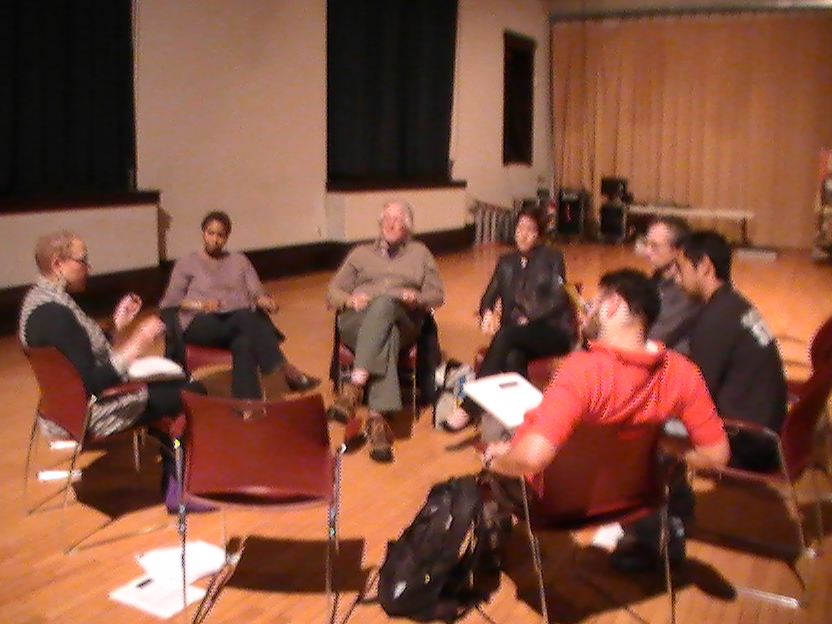
Audience members at Beth Roy’s talk engage in a ‘deep listening’ exercise where they tell and listen to stories about schooling.

We got a lot of interesting and engaging insights from the audience for the project based on the talk, which we will find a way to summarize here soon. After you watch the excerpt below, be sure to tell us what you think!

Ms. Roy also returned the following day to talk to BBDP leadership (staff, committee members facillitators, etc) in more detail. We had an exciting three hour discussion with her based on questions the audience had detailed from the previous evening. She went further into the ‘theory of nested conflict’ as we discussed how to engage both individuals and groups in this work in a meaningful way. In all, this was a great visit, and we are looking forward to upcoming capacity building events with our network.

As the Boston Busing/Desegregation Project unfolds, we want to stay true to our tagline of truth, learning and change.   All of us who have been a part of the project have learned a tremendous amount already. There is so much scholarship on the era, huge archives of historical records, many events that looked back at the era and countless stories and perspectives that may have been overlooked or unexamined. The learning part of the Project is to engage all these wonderful resources and come to new understandings.

To that end, we are going to start sharing an article or other resource each month that has stood out to us for its power in deepening our understanding. The first article we’re sharing is From Racial Liberalism to Racial Literacy : Brown v. Board of Education and the Interest-Divergence Dilemma by Lani Guinier. This article has been foundational for us because it so clearly articulated the complexity we’ve been encountering as we’ve tried to understand Boston’s desegregation crisis and put it in a larger historical and political perspective.

It’s a pretty academic article but it echoes so much of what we’ve heard directly or indirectly during our quest to better understand the crises that have come with our nation’s going from a legally segregated public school system to a legally desegregated one. While we know this isn’t the only dynamic that must be considered to understand the Boston busing/desegregation crisis, it is surely a major presenting one that is key to setting the context for the crisis.

Since this is a pretty intense academic article, we’ve pulled out some quotes to give you an overview of the article and perhaps, guide your reading. We’d love to hear your thoughts, questions, insights about what’s written here. Feel free to add your comments to the blog or to be in touch with us by phone or email. We look forward to hearing from you!

BBDP featured on WBUR

Posted: April 3, 2012 by meghandoran in Uncategorized

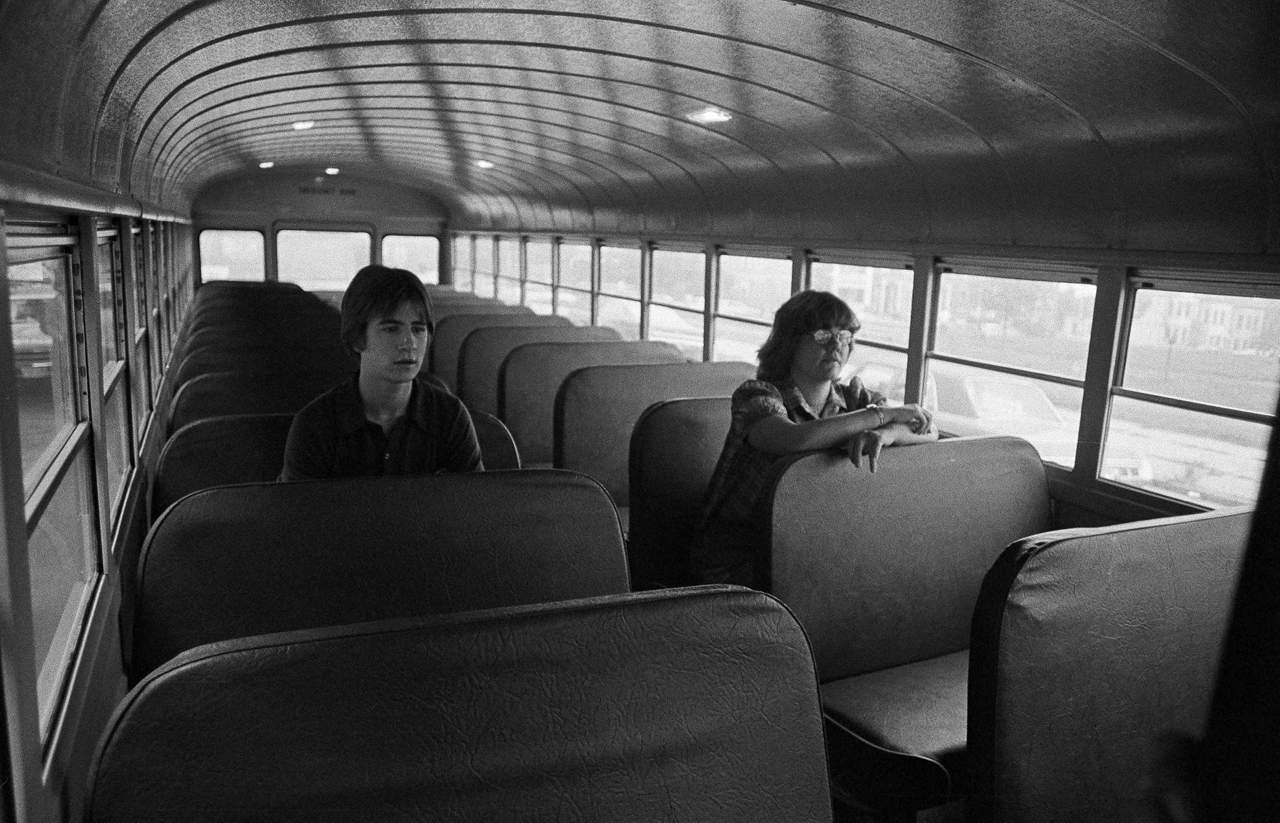
A recent story on WBUR discusses the anniversary of the court filing, tells a few stories of individuals who were bused and talks about the Boston Busing/Desegregation Project. Take a minute to hear some of our staff members, Meghan and Donna, talk about the pain people experience in revisiting this era. Also, we highly recommend looking at the slideshow of photos from the era – they are every bit as powerful as the stories Delores records.

Arts in the BBDP

Posted: March 27, 2012 by meghandoran in Uncategorized

On Thursday March 20th we convened a group of artists to talk about how might use the arts to strengthen the BBDP at the Pozen Center at the Massachusetts College of Art. We convened this group with a strong belief that people learn, understand and communicate  in a variety of ways. For some of us reading about history may be enough, but for many others we need to ‘experience’ history on multiple levels in order to grasp its full power. At the same time people may benefit form having different media through which to tell there stories. At the Boston Busing/Desegregation Project we have a strong commitment to integrating the arts and artists into the work we do – we believe this will only strengthen our processes of truth, learning and change.

So many great ideas flowed as we talked at the Pozen center(notes from artists gathering). We walked away renewed in our belief in the power of story and storytelling, with lots of ways we might incorporate the arts as our project progresses. We can’t wait to work with the artists who came out!

March 15, 2012 will mark the 40th anniversary of the filing of the Morgan v Hennigan case. This case was the basis for the June 1974 decision by Judge Garrity that was so central to Boston’s Busing/Desegregation crisis.  In this complaint, Black parents and students sought “an end to racial discrimination, segregation and unequal educational opportunity … conforming … to the following principles:

  1. Achievement of the greatest possible degree  of actual desegregation;
  2. Inclusion of suburban school systems as appropriate in the plan for desegregation,  in order to achieve, now and hereafter, the greatest possible degree of actual desegregation;
  3. Utilization of all necessary methods of integrating schools including rezoning, pairing, grouping, consolidation of schools, use of satellite zones and transportation;
  4. Desegregation of the faculty and staff of each school in the system;
  5. Inclusion of a specific program for eliminating racial discrimination in the hiring of faculty, staff and administrative personnel, including methods for overcoming the effects of past discrimination;
  6. Inclusion of a specific program for eliminating discrimination in the allocation of resources in the school system;
  7. Inclusion of specific proposals for providing a racially non-discriminatory educational program
  8. Inclusion of a specific program for making available on an equal basis the opportunity for all children to participate in all courses, curricula and programs within the system.”

This case was from the perspective of  Boston’s Black community and came after its 20 year struggle to make real Brown vs. Board of Education’s promise of ending legal segregation.  While their principles addressed their own struggle against systemic racism they also reflect a desire for opportunity for all. As we were discussing this anniversary,  BBDP Steering Committee member Barbara Lewis called our attention to some recent demands that a group of young activists made in 2011 about public education in the South Bronx:

1. We demand free quality education as a right guaranteed by the US Constitution.

2. We demand the dismantling of Bloomberg’s Panel for Educational Policy. We demand a new 13 member community board to run our public schools (comprised of parents, educators, education experts, community members, and a minimum of 5 student representatives).

3. We demand quality instruction. Teachers should ethnically, culturally, and racially reflect the student body. We demand experienced teachers who have a history of teaching students well. Teacher training should be intensive and include an apprenticeship with master teachers as well as experiences with the communities where the school is located.

4. We demand stronger extra-curricular activities to help stimulate and spark interest in students. Students should have options, opportunities, and choice in their education.

5. We demand a healthy, safe environment that does not expect our failure or anticipate our criminality. We demand a school culture that acknowledges our humanity (free of metal detectors, untrained and underpaid security guards, and abusive tactics).

6. We demand that all NYC public school communities foster structured and programmatic community building so that students, teachers, and staff learn in an environment that is respectful and safe for all.

7. We demand small classes. Class sizes should be humane and productive. We demand that the student to teacher ratio for a mainstream classroom should be no more than 15:1.

8. We demand student assessments and evaluations that reflect the variety of ways that we learn and think (portfolio assessments, thesis defenses, anecdotal evaluations, written exams). Student success should not depend solely on high stakes testing.

9. We demand a stop to the attack on our schools. If a school is deemed “failing”, we demand a team of qualified and diverse experts to assess how such schools can improve and the resources to improve them.

10. We demand fiscal equity for NYC public schools: as stated in the Education Budget and Reform Act of 2007 by the NYS Legislature, NYC public schools have been inadequately and inequitably funded. We demand the legislatively mandated $7 billion dollars in increased annual state education aid to be delivered to our schools now!

In many ways these demands parallel the Morgan v Hennigan principles. Though from different cities and eras, when put side by side these speak to the systemic nature of our collective struggle for quality education. They represent  the cross-generational, cross-culture and class desire and work to clarify what we mean by quality education, to learn from what we attempt in search of it,  and to rethink our path to truly transformational change  base d on what we learn.

This spring, we will have an official marking of thisMoragn v Hennigan filing anniversary  in a Black community convening called The Black Context: Education, Equity and Excellence  to continue to get a sense of what we need to know from that community’s  perspective in order to really learn from this history.  We will also do a program at the Boston Bar Association to listen to their sense of the history and context for the crisis. We know this is just a part of the story though an important part—as all are.

As we learn from and hear the truth of various communities relationship to this crisis—their contexts, histories and cultures—we can better understand that era and its legacy today. We  look forward to continue to learn with BBDP’s ever-growing Learning Network  about these benchmarks in this history. There are a plethora of resources about this era that we are thrilled to tap but just as importantly, we must tap our diverse stories, perspectives,  and histories to get to the root of the history we want to move from and the history we must ground in to bring about real transformation.

Bringing the ‘Old’ and ‘New’ Boston Together

Posted: March 13, 2012 by meghandoran in Uncategorized

In a March 3rd op-ed in the Boston Globe, Lawrence Harmon made the case for changing school assignment in Boston.  In this piece he argues that Boston’s history, ‘the old guard,’ and race relations in the city all need to be left behind in order to ‘get kids off the bus.’ This is an argument we’ve heard plenty here at the Boston Busing/Desegregation Project, and one we continue to disagree with. We feel that any changes to school assignment need to be rooted in history and the complexity of relationships in the city, both old and new.

Harmon argues that the selection of Theodore Landsmark to head a 2004 process aimed at reconsidering school assignment caused “the specter of busing” to float “over the hearing rooms.” We submit that it was not Landsmark’s presence insomuch as the real experiences and concerns of parents and residents in the city which brought memories of the busing/desegregation to the fore of these discussions. Selecting a committee head who was not in Boston during that time period will not erase these experiences, though it might allow the committee to be less attuned to the historical reality. Likewise, excluding the ‘old guard’ of parent and teacher advocacy organizations (such as BPON and BEAM), only means these interests will have less access to the process, not that the wounds experienced by parents and teachers with a long-term investment in the system will disappear altogether.

Unfortunately, Harmon pits “delivering on the promise of neighborhood schools” against “getting bogged down instead in the city’s racial politics.” We believe that to actually deliver on the promise of high quality neighborhood schools, it is essential to understand and illuminate the city’s racial and class politics so that the people of Boston have a chance to free themselves from being manipulated by those politics, and, instead work across differences to define and create the high quality schools we all want.

What we found promising in his article is the following quote: “In a city where nine out of 10 students are minorities, the sensible goal now should be to ensure high quality schools that children can reach on foot. Tens of millions of dollars spent annually on transportation could be redirected to classrooms. And youngsters could draw closer to their neighborhood community centers, libraries, and sports leagues at the end of the school day.” This quote acknowledges that ensuring high quality schools should be the goal, not just neighborhood schools. This feels like important common ground with what the Boston Busing/ Desegregation Project has been learning.

Like Harmon, we are glad to see a racially diverse committee tasked with advising the BPS in the school assignment process. Rather than pit ‘old’ Boston against ‘new’ Boston, we believe it is critical to get to have a meaningful and historically rooted conversation about school assignment and, even more important, to build shared understanding with parents and other stakeholders across the city about what a world-class public education system for Boston looks like that takes into account excellence and equity for all kids and schools across the city. Central to this conversation should be the needs and voices of families who don’t have a choice about whether to send their children to the Boston Public Schools: some of these families are new to the city, while others are long-term residents with years of experience in the BPS. What they have in common is lack of resources and voice to secure a better education for their children.

In what so many are trying to claim as “the new Boston,” a Boston beyond busing and desegregation efforts of the past and present, families without resources and voice to secure a better education for their children look to and depend not only on the leadership of public schools and the city, but on all the rest of us to ensure that this time around, in 2012 and going forward, the needs, vision and priorities of these families, and parents themselves, are at all the tables that decide the fate of their children – i.e., whether their kids will be supported to have a chance at opportunity for all or consigned to fuel the pipeline of growing inequality and poverty in this city and country. We, at the Boston Busing/Desegregation Project, believe that building a first-rate school system that works for all is essential for moving families and communities out of poverty and building a better Boston; and that to get there, we need to ensure that a critical mass of parents who reflect the diversity of “the new Boston” are included and help lead a new conversation and citywide visioning and planning effort to provide their kids and all kids the best education possible.

– Written by Meghan Doran and Jacqui Lindsay

In a recent story for WGBH (which features Cathy Hennessy, also in our film,”Can We Talk”) Phillip Martin explores the changing neighborhood of Charlestown and the legacy of the busing/desegregation crisis today. What do you think? What else should we know about Charlestown’s story? What do today’s young people need to know about the busing/desegregation crisis?