
ArtsEmerson invites UMN to a Special Performance

Posted: January 15, 2013 by Donna Bivens in Uncategorized

Beaty Hines

BBDP has found a wonderful partner in the Emerson College Community starting with our Steering Committee members Robbie McCauley and Gail Burton. This year we hope to deepen this partnership through work with  ArtsEmerson.  ( They will also be screening Can We Talk? this coming Saturday at 5PM ).

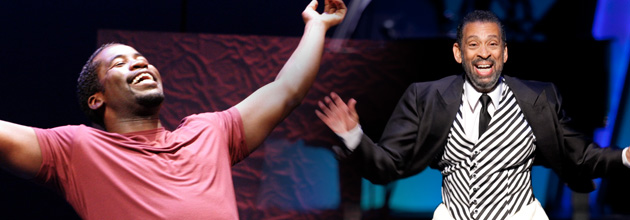
ArtsEmerson has invited the UMN community to a FREE evening of awe-inspiring entertainment with Obie award-winning actor Daniel Beaty and legendary showman Maurice Hines as they showcase pieces from their upcoming productions.  ArtsEmerson is presenting this special event on Jan. 22 at 7:30 PM that is free for all those who reserve tickets ahead of time: an evening of performances by Daniel Beaty and Maurine Hines This evening is part of an initiative at Emerson that seeks to engage under represented segments of the Boston community with arts at Emerson.

Tickets are free but reservations are required. Please click on the “Buy” button to reserve your seats. You will not be charged for your order.

Tue Jan 22 2013 – 7:30 PM Buy

About Daniel Beaty

Daniel Beaty is an award-winning actor, singer, writer and composer. He has received Lucille Lortel, Drama Desk, Drama League and Outer Critics Circle nominations, the 2010 AUDELCO Award for Outstanding Solo Performance and the 2010 Ovation Award for Best Male Lead Actor. He received the 2007 Obie Award for Excellence in Off-Broadway Theater for Writing & Performing and the 2007 AUDELCO Award for Solo Performance for Emergency. He is the recipient of the 2007 Scotsman Fringe First Award for the best new writer at the Edinburgh Festival.

Funnier than most serious plays and vastly smarter than most funny plays, Daniel Beaty’s Emergency is the most intriguing new show of the season. Its premise is inspired.” -Jeremy McCarter, New York Magazine

About Maurice Hines

Dancer, actor, choreographer, director and singer Maurice Hines has showcased his talents in a variety of settings, including Broadway, stage, T.V. and film. From the age of five Maurice and his younger brother Gregory performed as a dance duo. In 1986, Hines created, choreographed and starred in the musical Uptown…It’s Hot!, which received a Tony Award nomination for Best Actor in a Musical. Since that time, Hines has choreographed and directed numerous productions as well as music videos.

“Hines is the consummate showman… There’s a master at work here…” – The Boston Herald
Don’t miss these bold and brilliant productions!

The current phase of the Boston Busing/Desegregation Project is all about collecting stories both one-on-one and in a variety of group storytelling methods. We will be using interviews, popular education techniques, story circles and a number of other methods including old-fashioned community meeting to continue our truth-seeking process. On January 24 at Brighton-Allston Congregational Church  (register) and on March 7 at the Mission Main Community Center (register) we will pilot story circles that will link our individual stories with our collective struggle for excellence, equity and access in the public school system and the city. We hope all in the BBDP and the larger UMN community will attend and spread the word especially–but not exclusively–to those living now or during the desegregation years in these neighborhoods. W e especially encourage those who might be interested in facilitating circles to come to these two story circles. A schedule of others will be shared shortly.

Later in the year, we will have structured  intra-racial group explorations of the class and culture tensions that we must address to come to a collective understanding of our similarities and differences. These will include a diversity from each group–African, Asian, European and Latino–who want to take leadership in figuring our together how to  take  this discussion out into the many cultural groups/nationalities that make up these broad racial groups. We will look at each group’s specific historical struggles to

  • seek race and class equity to free their lives
  • Gain genuine access to resources and decision-making power that determine the quality of their lives
  • Demand excellence from systems and institutions that shape their lives.

Hopefully, this work together will take us another step towards BBPD’s goals:

 Achieving:

  1. Greater awareness of a more inclusive story about our past: the history that led to and followed Boston’s busing/desegregation crisis. This is shaped by previously excluded or marginalized voices and highlights the trauma and impact of the era that continues to exist in the city. It also includes public acknowledgement of an inclusive history.
  1.  A more inclusive history informs decision making today: about race and class equity, democratic access, and achieving excellence in the city and institutions that impact it. This includes making sure that lessons from history about these issues are considered as Boston re-vamps its school assignment process and designs and implements other reforms. This also includes raising awareness about the influence of larger political forces, such as corporate interests, impacting excellence, equity, and access today in public education, our city, and our society.
  1. A shared vision and action steps across difference to increase race and class equity, democratic access, and higher quality institutions. This includes a list of recommendations and action steps for moving forward, developed in collaboration with community partners and informed by our past, our present, and the future we want — for public education, our families, our communities, and Boston.

And contributing to:

Individual and collective learning, leadership, action, and advocacy across difference for policy, institutional, and community change to achieve the shared vision and priorities that emerge from working together to achieve equity, access, and excellence for all.

Please come and spread the word!

The Mountaintop

Posted: January 15, 2013 by Donna Bivens in Uncategorized

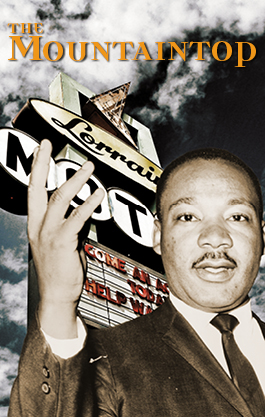
cstMT.265x417Union of Minority Neighborhoods’ BBDP and Community Change Inc. collaborated with the Central Square Theater by co-presenting at  the talk-back for the their new play  The Mountaintop this past Friday. The sold-out performance was both moving and thought-provoking  as we were invited to imagine that last night of Dr. King’s life.

Our wide ranging talk-back discussion touched on many issues: the nature of systemic racism, our images of God, our resistances to embracing the full complexity of our history, and our own barriers to “picking up the baton”.

The play is part of Central Square Theaters celebration of the 150th anniversary of the Emancipation Proclamation. It’s also a great way to celebrate Dr. King’s birthday. We highly recommend it and encourage you to attend and to use UMN’s promo code (UMN) to get a 10% discount.

Breaking the Cycle

Posted: January 14, 2013 by meghandoran in Uncategorized

As Boston’s attempt to change the way students are assigned to schools nears to a close, the Boston Busing/Desegregation Project continues to advocate that we carefully consider the lessons of the past through this process. If a recent article in the Boston Globe is any indication, there’s a lot more work that needs to be done to together to apply the lessons of this history to today. Of particular interest to us (not surprisingly) was this section of the article:

This patchwork — which, incidentally, costs millions each year to operate — is intended to give more students the opportunity to attend quality schools. It also reflects another, somewhat more antiquated goal: desegregation.

Before school busing in the 1970s, Boston had white schools and minority schools. But after four decades of white flight, that is hardly the case. The public school system is just 13 percent white. If you take the exam schools out of the equation, the percentage drops into the single digits. You couldn’t segregate the Boston public schools now if you wanted to.

That doesn’t necessarily soothe the fears of those who don’t trust the School Department when it proclaims its commitment to fairness. It doesn’t help that most of the district’s underperforming schools, to this day, are in minority neighborhoods.

Our gut reaction: we cringe to see school desegregation referred to as ‘antiquated.’ If schools continue to be racially and economically segregated (whether within public schools, between public schools and private schools or between the city and its suburbs) then it seems school desegregation is unrealized rather than antiquated. We’ve heard from many people involved in the struggle for equal quality education in Boston leading up to 1974 that school desegregation was a strategy aimed at bringing more quality and better resources to kids in an inequitable, segregated system. This leads us to see a continuity with our past, rather than a break with it: in the 1970’s parents were struggling to get the best possible education for their children, and they continue to do the same today. Today, just as then, there continues to be considerable inequities in the system, with struggling schools concentrated in areas that are highly segregated by race and class.

We take issue with the assertion that ‘you couldn’t segregate the Boston Public schools now if you wanted to.’  First, as the Globe article points us, there is segregation in the schools right now, with more kids with privilege having access to some of the highest performing schools in the system (especially the exam schools). Second, there is reasonable concern that a return to neighborhood schools could exacerbate the problems we are already facing in our system today: race and class inequities in education. There is a complex relationship between race, class and neighborhood in this city, one which, if we learned anything from the 1970s, we ignore at our own peril.

We know that the city’s External Advisory Committee has grappled with some of these issues, but we fear they haven’t been given the time, space or resources to do so in a meaningful way. At the Boston Busing/Desegregation Project, we are less concerned with how different or similar the city is today to the 1970s, and more concerned with a more pressing question pertaining to the past: How do we break this cycle? There are definitely some answers out there, but only if we go looking for long term solutions rather than short term fixes – another important lesson from the past.   

Invisible Histories

Posted: January 10, 2013 by meghandoran in Uncategorized

Invisible Histories

Donna and I were recently talking about the production of Ralph Ellison’s Invisible Man being put on right now by the Huntington Theatre Company, which led us to talking about the invisible histories of busing/desegregation. One thing that struck me was Donna’s comment that when your history is invisible it’s hard to tell just one piece of it. Thus, when we talk about school desegregation in Boston, many people from communities of color immediately start talking about the larger context and earlier history, because they believe we have to understand that before we can even begin to talk about the desegregation years–or today. Those whose history is told and retold have an easier time just talking about just one period of time.


Around the time of this conversation we also got an email from someone from South Boston whose family was actively anti-busing and anti-racism expressing skepticism about public story telling given so much media inaccuracy.  Despite (or sometimes because of) the popularity of  J. Anthony Lukas’ “Common Ground,” with its lengthy rendering, there are many people in this city who believe their history has been made invisible (see here for one critique of how the story is told in Common Ground.)  One of the project’s goals is to help make the full history more visible, which at times means going much further back than 1974.

Each month this spring the BBDP plans on holding an open house potluck for members of our Learning Network. We will break bread together, network and have an informal discussion around a theme. February’s theme will be Invisible Histories.  Possible topics for conversation include lessons from Invisible Man, different histories that have been made invisible in Boston, and how we make those histories visible. We look forward to seeing you! Click here to register.

New Year’s Reflection on History

Posted: January 2, 2013 by Donna Bivens in Uncategorized
Tags: , ,

2013 begins a year of anniversaries leading up to Boston’s 40th marking of the Busing/Desegregation Crisis. It also starts off with a significant anniversary for the nation: the 150th anniversary of the signing of the Emancipation Proclamation. An article in the Huffington Post by Janell Ross entitled America’s Understanding of Emancipation Proclamation on It’s 150th Anniversary Too Simple for Country’s Own Good could just as well be a message to us as we look at the history of Brown v Board of Education and Boston’s long struggle for excellence, equity and access in public school education for all.

“What Americans have to understand is that there were 100 years between Lincoln signing the Emancipation Proclamation and the 1963 March on Washington,” said Bunch, “and a few years more before that freedom was given any durable and consistent meaning with the Voting Rights Act and the Civil Rights Act.”

“When you understand that freedom was a process, not a moment, then you can allow yourself to wonder what work is left for us in the next 100 years.”

We look forward to continuing to explore this history with you in the coming year through interviews, story circles and through cross class and nationality intra-racial group explorations linking the past to the present  and future. As always, we welcome your reflections on the blog or in person.

Happy New Year!


Three Reasons You Should Give to the BBDP Today!

Posted: December 20, 2012 by meghandoran in Uncategorized

We’d like to raise $2000.00 by the end of the year – can you contribute to help us reach this goal? Here are three reasons you should consider us in your year end giving.

  1. Many people in Boston think we shouldn’t look back/should focus on the future. We’re okay with that. But we also know there are a lot of people who do see a need to ground in our history, to heal, to learn in order to really move forward. As a recent steering committee member said to us: “The reason we can’t get past this history is that we keep reliving it.” As we look back on the city’s (and the nation’s) history we see the challenge of equity, access, and excellence everywhere we look. These issues are central to democracy in education and in society. We must address them together  from every angle we can.
  2. There are many organizations across the city working fervently on critical issues of access, equity and excellence. We complement this work by creating a space where all of us deeply committed to democracy and education can take a longer view by connecting history, listening, learning, and organizing in order to make systemic change at a local level. This means we need local support!
  3. We care deeply about equity, access and excellence–and addressing the systemic race and class inequities that are among the barriers to them. We’re committed to bringing a diverse community of people who share these values but don’t always have ways to work together. If you value equity, access, and excellence then we see you as a part of our community. Strengthening our community is a labor of love that takes intensive time and resources.

Click Here to Donate

Thank you and Happy Holidays!!!

Can we stop focusing simply on transactional moves we see as winnable and start working for the transformation of the institutions that perpetuate suffering?      –john a. powell

In a side conversation at one of the early report backs on the school assignment process presented by the BPS, I shared my concern with my small group facilitator that in several of the plans there were no “high quality schools” in my “zone” in Roxbury.  With a smile he replied that in a few years, the whole complexion of my neighborhood would change including the quality of the schools. Other opinions he shared in our brief conversation let me know that while he was referring to the complexion in terms of race we were also talking about complexion in terms of class. It also let me know that he thought this was a good thing.

Needless to say, it gave me pause and clearly revealed that he and I  had very different assumptions and hopes for the future of the city. It was only at a recent presentation by Dr. James Jennings entitled  Neighborhood Schools and Neighborhood Inequality in Boston, Massachusetts: Key Questions and Issues for Community Organizing* that the concerns that brief exchange raised for me got focused and reflected on in current conversations about equity, access and excellence “then and now”.

The report lifts up three indicators that have been shown to impact academic excellence and maps where Boston has tremendous inequities:

  • Income / Poverty
  • Health disparities / food insecurity
  • Housing instability

It maps tremendous inequities in Boston around these indicators and  raises excellent questions and concerns about the barriers to equitable neighborhoods school when such neighborhood inequities exist.

It offers four strategies for addressing these inequities. Most relevant to the mission of BBDP,  it suggests adopting, supporting, and mobilizing around “a theory of change for improving low performing public schools and the raising of the academic achievement of children and youth which acknowledges inequality, and the history of racial inequality”.

Read the rest of this entry »

Evaluating Boston’s Legacy

Posted: December 17, 2012 by meghandoran in Uncategorized

Perhaps we all tend to get reflective towards the end of the year; we’ve been hearing a lot lately about Boston’s legacy on race and racism since school desegregation, and not just in relation to school assignment.

Miniard Culpepper had this to say in the Boston Globe recently:

I think Boston has come a long way; I think we have a long way to go. I look at city government now, and the representation in upper management — 10 percent Hispanic and African-American [males], 12 percent women [of color] in City Hall leadership positions.

In reporting that Boston has the number one per capita rate of hate crimes in the country, the Boston Business Journal also brought up where we’ve come to:

Approximately half of Boston’s reported hate crimes were race related, a fact that pokes holes in the idea the city has come a long way since the chaos following mandated school busing in the 1970s.

Mayor Menino also recently commented on where we are today from a historical perspective:

Asked to name the best thing he had done for Boston, Mr. Menino pointed both hands at himself. “Me becoming mayor!” he laughed.

More seriously, he said, “my No. 1 thing is bringing racial harmony to the city.” Referring to the bitter battles in the 1970s over school busing, he added, “We don’t have the nonsense that we used to have because I don’t tolerate it.”

We’ve learned from our work over the past year that parts of the truth is in each of these assessments of race and racism in Boston. How do we fully evaluate where we’ve been, where we are, and where we have to go in dealing with complex issues like systemic racism and socioeconomic inequities in Boston?  What do you think? How do we evaluate how far we’ve come? And, more importantly, what do we have to do to move forward?

BBDP Sharing and Learning Nationally

Posted: November 15, 2012 by Donna Bivens in Uncategorized

Recently, BBDP staff have been asked to share about the project in national gatherings.  In that process, we also get the chance  to learn more about how the issues we face in Boston are playing out across the country.

The work of the Center for Courage and Renewal (CCR)  has made a big contribution to the BBDP and the founder of that work, Parker Palmer, has agreed to be a national adviser to the Project.

In October,  I attended to a retreat for Courage and Renewal facilitators and had the opportunity to experience and learn more about the democracy work CCR is taking on. Democracy in education has emerged as a huge theme in the project as many have seen the increasing of inequities in race and class as strikes against the democratizing efforts of earlier liberation movements in education and society.

CCR’s  Healing the Heart of Democracy project puts forth five habits those of us committed to democratizing education and society must practice:

1. An understanding that we are all in this together.
2. An appreciation of the value of ”otherness.“
3. An ability to hold tension in life-giving ways.
4. A sense of personal voice and agency.
5. A capacity to create community.

The need for these practices has been at the heart of the brokenness we hear in exploring excellence, equity and access then–during the busing/desegregation crisis –and now– as the quest for excellence, equity and access for all continues to elude us today. I came back from that conference convinced that integrating these habits into BBDP can truly help us to get beyond what we are working against to what we are working for in public education.

A couple of weeks later, our partner and supporter One Nation Indivisible, a program of the Charles Hamilton Houston Institute and the Poverty and Race Research Action Council, invited us to what at first seemed an unlikely place for BBDP: a meeting of experts working in cities and towns with voluntary desegregation plans throughout the country. We were invited to share about the Project and to present some of the Courage work mentioned above.

For many at the gathering, it kept coming up that some core historical fissures have not been fully addressed and understood and continue to undermine real democratization –and for their work, integration–efforts. We shared a BBDP PowerPoint about the project and had lively discussion about how several of the different cities represented–including out host city Omaha, Nebraska have racial and/or socioeconomic histories that are at the center of their conflicts today. BBDP seemed quite relevant!

In sharing about the Courage work, this hard-working and largely data-focused group responded very positively to  focusing some time on the five habits in their own work as they explored: When to act and when to speak up in a resistant system? How to hold the many tensions and conflicts that come up in this work? How to practice “we’re all in this together”in the midst of a political climate that is polarized and promoting just the opposite?

Being there, I learned a lot about how others throughout the country are addressing excellence, access and equity issues and learning from their successes and  their failures. I also saw that BBDP, as One Nation Indivisible insisted, has much to share in this work and a responsibility to practice the habit of bringing our voice and agency.