
Archive for the ‘Uncategorized’ Category

Invisible Histories

Posted: January 10, 2013 by meghandoran in Uncategorized

Invisible Histories

Donna and I were recently talking about the production of Ralph Ellison’s Invisible Man being put on right now by the Huntington Theatre Company, which led us to talking about the invisible histories of busing/desegregation. One thing that struck me was Donna’s comment that when your history is invisible it’s hard to tell just one piece of it. Thus, when we talk about school desegregation in Boston, many people from communities of color immediately start talking about the larger context and earlier history, because they believe we have to understand that before we can even begin to talk about the desegregation years–or today. Those whose history is told and retold have an easier time just talking about just one period of time.


Around the time of this conversation we also got an email from someone from South Boston whose family was actively anti-busing and anti-racism expressing skepticism about public story telling given so much media inaccuracy.  Despite (or sometimes because of) the popularity of  J. Anthony Lukas’ “Common Ground,” with its lengthy rendering, there are many people in this city who believe their history has been made invisible (see here for one critique of how the story is told in Common Ground.)  One of the project’s goals is to help make the full history more visible, which at times means going much further back than 1974.

Each month this spring the BBDP plans on holding an open house potluck for members of our Learning Network. We will break bread together, network and have an informal discussion around a theme. February’s theme will be Invisible Histories.  Possible topics for conversation include lessons from Invisible Man, different histories that have been made invisible in Boston, and how we make those histories visible. We look forward to seeing you! Click here to register.
New Year’s Reflection on History

Posted: January 2, 2013 by Donna Bivens in Uncategorized
Tags: , ,

2013 begins a year of anniversaries leading up to Boston’s 40th marking of the Busing/Desegregation Crisis. It also starts off with a significant anniversary for the nation: the 150th anniversary of the signing of the Emancipation Proclamation. An article in the Huffington Post by Janell Ross entitled America’s Understanding of Emancipation Proclamation on It’s 150th Anniversary Too Simple for Country’s Own Good could just as well be a message to us as we look at the history of Brown v Board of Education and Boston’s long struggle for excellence, equity and access in public school education for all.

“What Americans have to understand is that there were 100 years between Lincoln signing the Emancipation Proclamation and the 1963 March on Washington,” said Bunch, “and a few years more before that freedom was given any durable and consistent meaning with the Voting Rights Act and the Civil Rights Act.”

“When you understand that freedom was a process, not a moment, then you can allow yourself to wonder what work is left for us in the next 100 years.”

We look forward to continuing to explore this history with you in the coming year through interviews, story circles and through cross class and nationality intra-racial group explorations linking the past to the present  and future. As always, we welcome your reflections on the blog or in person.

Happy New Year!


Three Reasons You Should Give to the BBDP Today!

Posted: December 20, 2012 by meghandoran in Uncategorized

We’d like to raise $2000.00 by the end of the year – can you contribute to help us reach this goal? Here are three reasons you should consider us in your year end giving.

  1. Many people in Boston think we shouldn’t look back/should focus on the future. We’re okay with that. But we also know there are a lot of people who do see a need to ground in our history, to heal, to learn in order to really move forward. As a recent steering committee member said to us: “The reason we can’t get past this history is that we keep reliving it.” As we look back on the city’s (and the nation’s) history we see the challenge of equity, access, and excellence everywhere we look. These issues are central to democracy in education and in society. We must address them together  from every angle we can.
  2. There are many organizations across the city working fervently on critical issues of access, equity and excellence. We complement this work by creating a space where all of us deeply committed to democracy and education can take a longer view by connecting history, listening, learning, and organizing in order to make systemic change at a local level. This means we need local support!
  3. We care deeply about equity, access and excellence–and addressing the systemic race and class inequities that are among the barriers to them. We’re committed to bringing a diverse community of people who share these values but don’t always have ways to work together. If you value equity, access, and excellence then we see you as a part of our community. Strengthening our community is a labor of love that takes intensive time and resources.

Click Here to Donate

Thank you and Happy Holidays!!!

Can we stop focusing simply on transactional moves we see as winnable and start working for the transformation of the institutions that perpetuate suffering?      –john a. powell

In a side conversation at one of the early report backs on the school assignment process presented by the BPS, I shared my concern with my small group facilitator that in several of the plans there were no “high quality schools” in my “zone” in Roxbury.  With a smile he replied that in a few years, the whole complexion of my neighborhood would change including the quality of the schools. Other opinions he shared in our brief conversation let me know that while he was referring to the complexion in terms of race we were also talking about complexion in terms of class. It also let me know that he thought this was a good thing.

Needless to say, it gave me pause and clearly revealed that he and I  had very different assumptions and hopes for the future of the city. It was only at a recent presentation by Dr. James Jennings entitled  Neighborhood Schools and Neighborhood Inequality in Boston, Massachusetts: Key Questions and Issues for Community Organizing* that the concerns that brief exchange raised for me got focused and reflected on in current conversations about equity, access and excellence “then and now”.

The report lifts up three indicators that have been shown to impact academic excellence and maps where Boston has tremendous inequities:

  • Income / Poverty
  • Health disparities / food insecurity
  • Housing instability

It maps tremendous inequities in Boston around these indicators and  raises excellent questions and concerns about the barriers to equitable neighborhoods school when such neighborhood inequities exist.

It offers four strategies for addressing these inequities. Most relevant to the mission of BBDP,  it suggests adopting, supporting, and mobilizing around “a theory of change for improving low performing public schools and the raising of the academic achievement of children and youth which acknowledges inequality, and the history of racial inequality”.

(more…)

Evaluating Boston’s Legacy

Posted: December 17, 2012 by meghandoran in Uncategorized

Perhaps we all tend to get reflective towards the end of the year; we’ve been hearing a lot lately about Boston’s legacy on race and racism since school desegregation, and not just in relation to school assignment.

Miniard Culpepper had this to say in the Boston Globe recently:

I think Boston has come a long way; I think we have a long way to go. I look at city government now, and the representation in upper management — 10 percent Hispanic and African-American [males], 12 percent women [of color] in City Hall leadership positions.

In reporting that Boston has the number one per capita rate of hate crimes in the country, the Boston Business Journal also brought up where we’ve come to:

Approximately half of Boston’s reported hate crimes were race related, a fact that pokes holes in the idea the city has come a long way since the chaos following mandated school busing in the 1970s.

Mayor Menino also recently commented on where we are today from a historical perspective:

Asked to name the best thing he had done for Boston, Mr. Menino pointed both hands at himself. “Me becoming mayor!” he laughed.

More seriously, he said, “my No. 1 thing is bringing racial harmony to the city.” Referring to the bitter battles in the 1970s over school busing, he added, “We don’t have the nonsense that we used to have because I don’t tolerate it.”

We’ve learned from our work over the past year that parts of the truth is in each of these assessments of race and racism in Boston. How do we fully evaluate where we’ve been, where we are, and where we have to go in dealing with complex issues like systemic racism and socioeconomic inequities in Boston?  What do you think? How do we evaluate how far we’ve come? And, more importantly, what do we have to do to move forward?

BBDP Sharing and Learning Nationally

Posted: November 15, 2012 by Donna Bivens in Uncategorized

Recently, BBDP staff have been asked to share about the project in national gatherings.  In that process, we also get the chance  to learn more about how the issues we face in Boston are playing out across the country.

The work of the Center for Courage and Renewal (CCR)  has made a big contribution to the BBDP and the founder of that work, Parker Palmer, has agreed to be a national adviser to the Project.

In October,  I attended to a retreat for Courage and Renewal facilitators and had the opportunity to experience and learn more about the democracy work CCR is taking on. Democracy in education has emerged as a huge theme in the project as many have seen the increasing of inequities in race and class as strikes against the democratizing efforts of earlier liberation movements in education and society.

CCR’s  Healing the Heart of Democracy project puts forth five habits those of us committed to democratizing education and society must practice:

1. An understanding that we are all in this together.
2. An appreciation of the value of ”otherness.“
3. An ability to hold tension in life-giving ways.
4. A sense of personal voice and agency.
5. A capacity to create community.

The need for these practices has been at the heart of the brokenness we hear in exploring excellence, equity and access then–during the busing/desegregation crisis –and now– as the quest for excellence, equity and access for all continues to elude us today. I came back from that conference convinced that integrating these habits into BBDP can truly help us to get beyond what we are working against to what we are working for in public education.

A couple of weeks later, our partner and supporter One Nation Indivisible, a program of the Charles Hamilton Houston Institute and the Poverty and Race Research Action Council, invited us to what at first seemed an unlikely place for BBDP: a meeting of experts working in cities and towns with voluntary desegregation plans throughout the country. We were invited to share about the Project and to present some of the Courage work mentioned above.

For many at the gathering, it kept coming up that some core historical fissures have not been fully addressed and understood and continue to undermine real democratization –and for their work, integration–efforts. We shared a BBDP PowerPoint about the project and had lively discussion about how several of the different cities represented–including out host city Omaha, Nebraska have racial and/or socioeconomic histories that are at the center of their conflicts today. BBDP seemed quite relevant!

In sharing about the Courage work, this hard-working and largely data-focused group responded very positively to  focusing some time on the five habits in their own work as they explored: When to act and when to speak up in a resistant system? How to hold the many tensions and conflicts that come up in this work? How to practice “we’re all in this together”in the midst of a political climate that is polarized and promoting just the opposite?

Being there, I learned a lot about how others throughout the country are addressing excellence, access and equity issues and learning from their successes and  their failures. I also saw that BBDP, as One Nation Indivisible insisted, has much to share in this work and a responsibility to practice the habit of bringing our voice and agency.

In October, we blogged about joining the Community Coalition for Equity, Excellence and Engagement to ask the Boston Public Schools to put quality first as it reconsiders school assignment. As we have followed this process and listened to the many stakeholders involved, we and the Coalition believe that the focus should be on improving schools across the city rather than finding new ways to divide students among unequal schools.

Nonetheless, the  process has continued and very soon the Mayor’s External Advisory Committee is slated to make a recommendation to the BPS for a new school assignment plan. It is important that if the BPS does change how students are assigned to schools, they must fully consider the implications for equity, access and excellence, especially in light of Boston’s school assignment history.

On November 20th we’ll hold an update for the BBDP community and the Community Coalition for Equity, Excellence and Engagement to explain the school assignment plans under the consideration by the EAC. We’ll then think through what we can learn from Boston’s school desegregation and assignment history about the recommendations they are making. This session will be used to draft the BBDP’s response to the process and plans through a historical lens.

Oh, and it’s a potluck, so when you join us, don’t forget to bring a dish to share! Click here to register.

P.S. To see and participate in our evolving timeline of the struggle for excellence, equity and access click here. Also, it you have additions or corrections to the history please send them to BBDP!

Learning Network Gathering

Posted: November 12, 2012 by Donna Bivens in Uncategorized

For over a year, a Learning Network Planning Committee has been meeting to support the establishment and support of the BBDP Learning Network. On Tuesday, November 13 from 6:30-8:30 PM,  they will hold the first informal gathering of the Learning Network at UMN. These events will be places for sharing, for capacity building and for study and action.

For their first gathering the Learning Network Planning Committee invites you to come  tell, listen to, and share stories about your educational experiences.   Our focus will be on defining “excellent” education through our personal stories.  We plan to create a safe  setting, where we can break bread over a light, tasty meal, and build confidence as we listen to others and ourselves.

If you’ve come to an event and signed up or been involved in the project you are a part of the Learning Network that serves as a container to hold the project, a learning community and a resource pool and we welcome your participation. The Committee will be providing dinner for all who come so please register online  or call the office (Donna at 617-830-5085) if you’re able to attend.

Universities Partner in BBDP Story Collection

Posted: November 12, 2012 by Donna Bivens in Uncategorized

Since its beginning Boston Busing Desegregation Project has had tremendous support from universities. The story collection phase of the project is no exception!

Writing students from Chris Gallagher’s Northeastern University Masters-level class are collecting stories of those who impacted or were impacted by the busing/desegregation crisis. They also helped produce the summary of the phase one report. Students from Lesley University will also be adding to this effort.

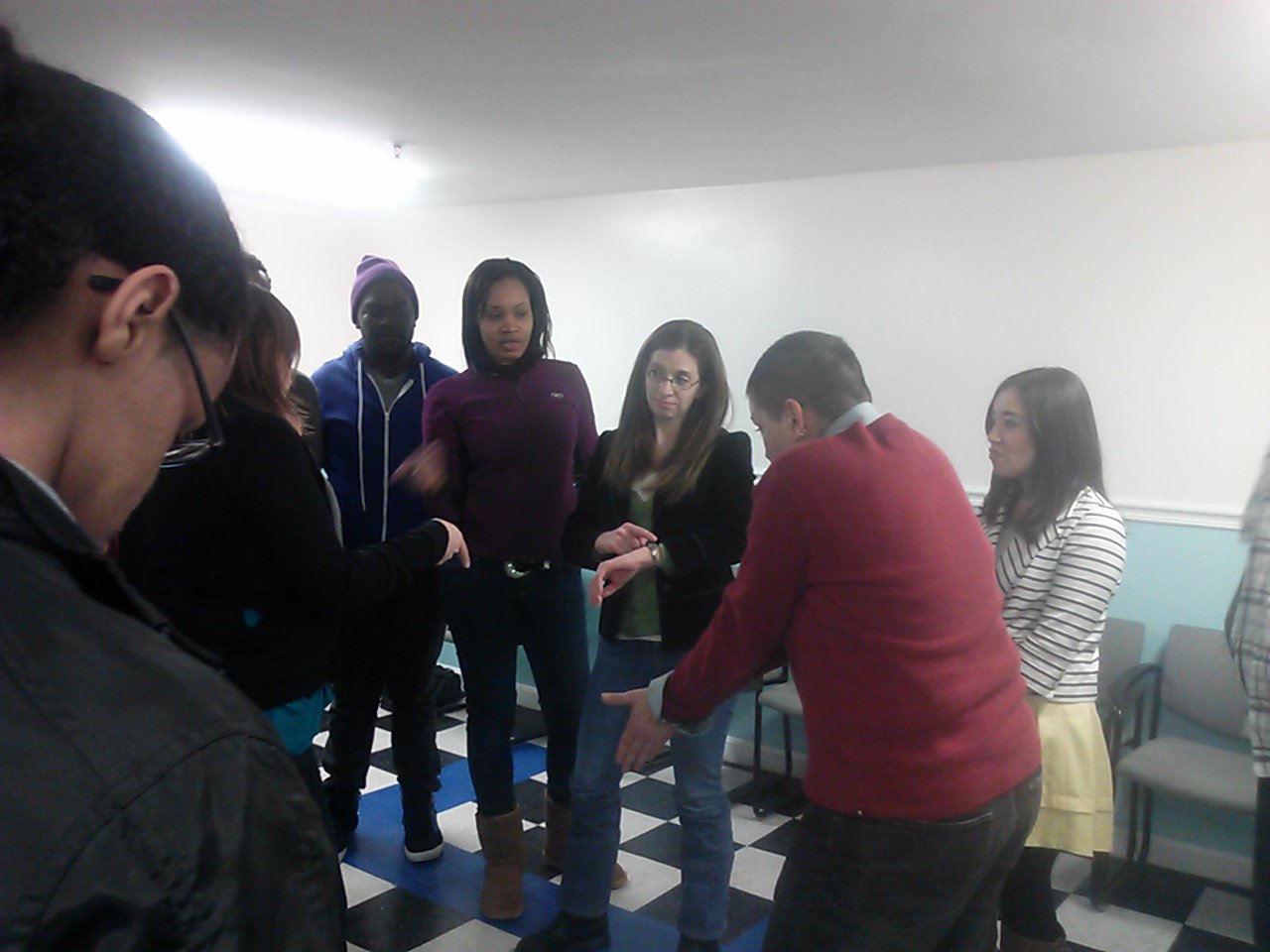
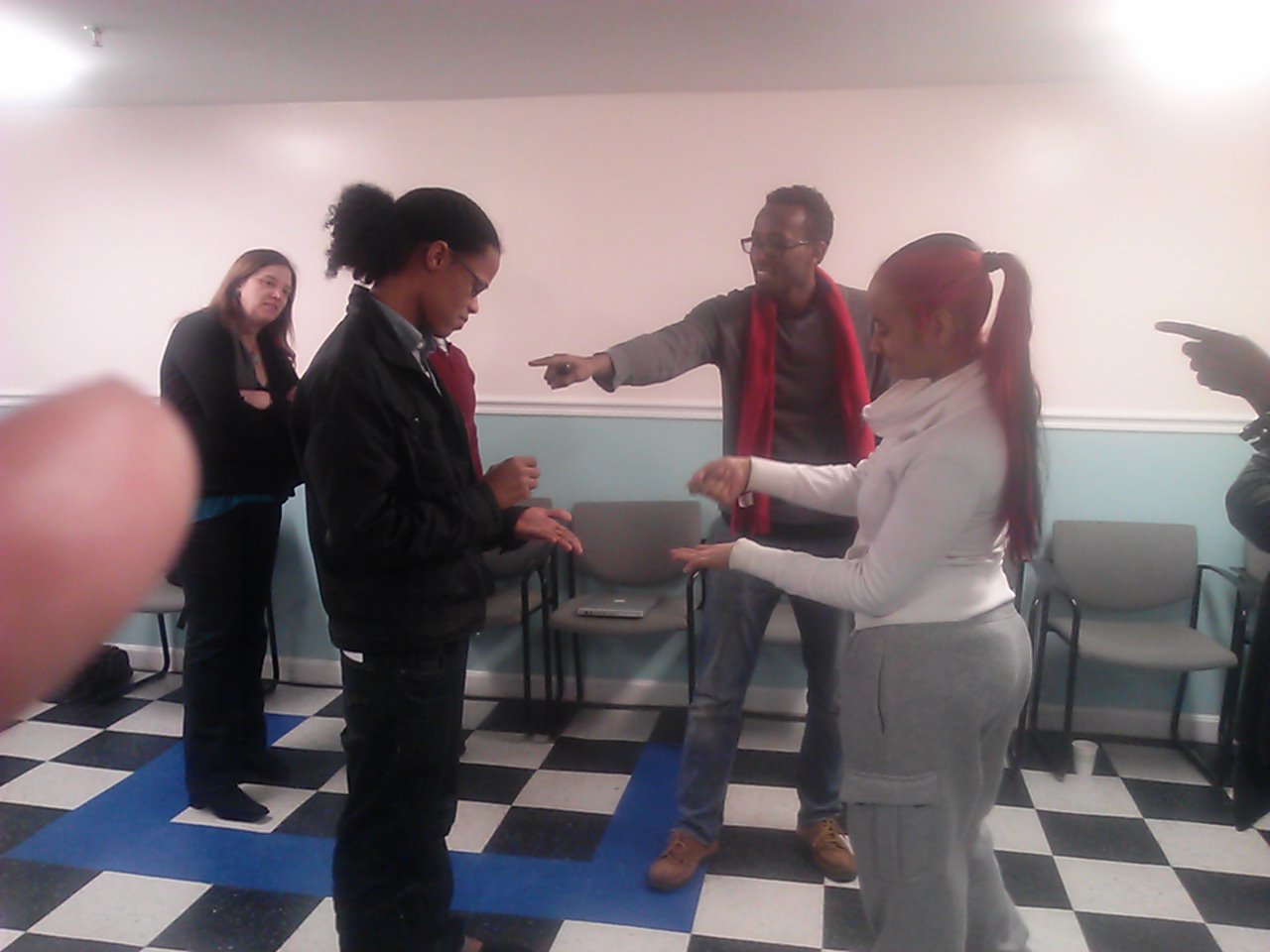
 University professor (and Steering Committee member) Gail Burton has involved her Roxbury Community and Emerson College theater students in using theater techniques with students, parents and teachers to help develop their BBDP stories. This fun, interactive approach is new for the Project. It offers great group building, creativity and opportunities for artistic expression. We encourage you to sign up if you are a teacher or parent.

As the story collecting continues and with the help of our partners, we look forward to offering many diverse ways of story telling and story collecting. We hope to see you at one or more!

2012 First Annual BBDP Gathering

Posted: November 8, 2012 by Donna Bivens in Uncategorized

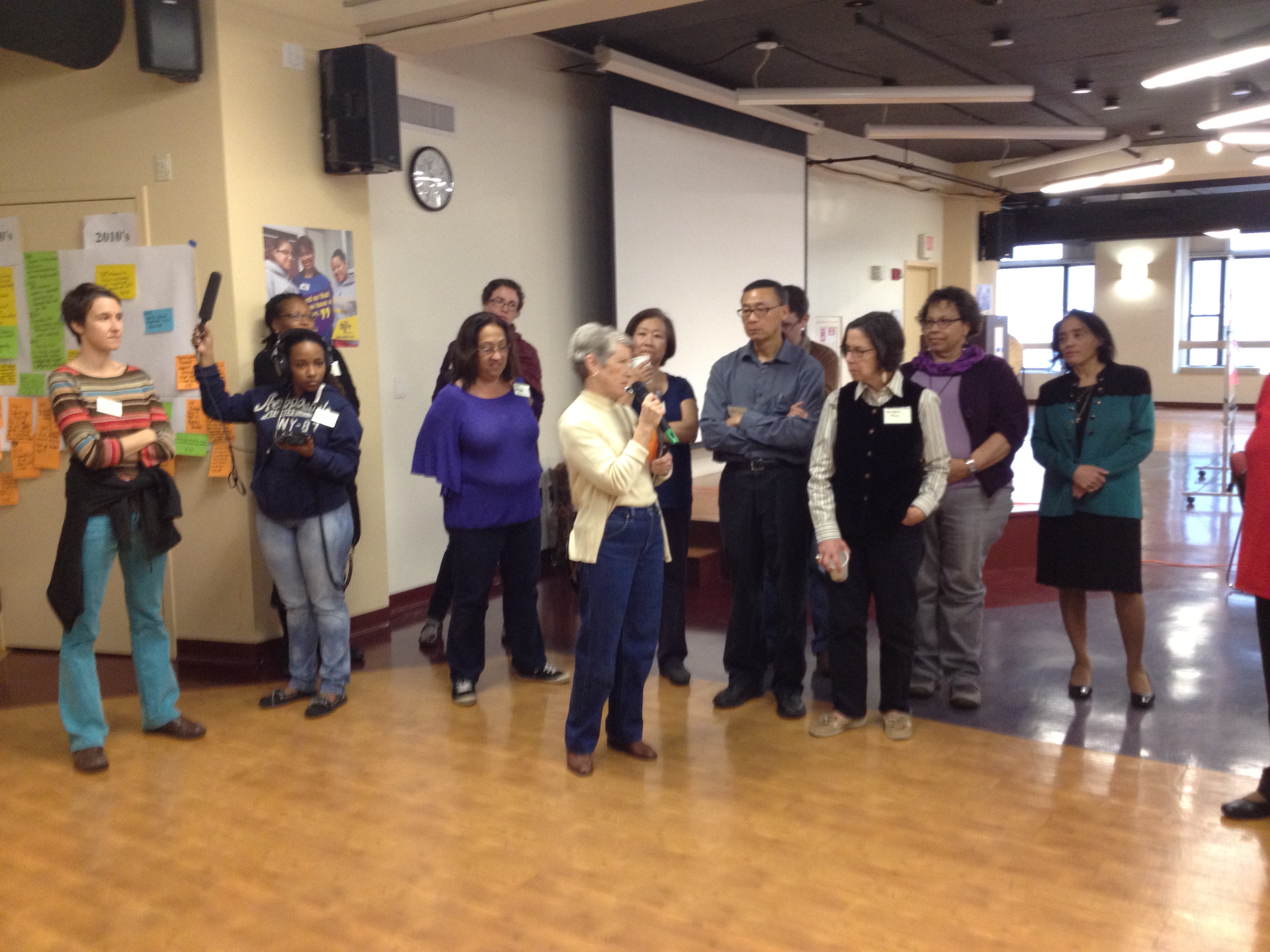
On October 27, a “small but mighty” group of Learning Network members came together to mark the end of the project’s first year and begin the work of the project’s second phase–storytelling and intra-community dialogues.

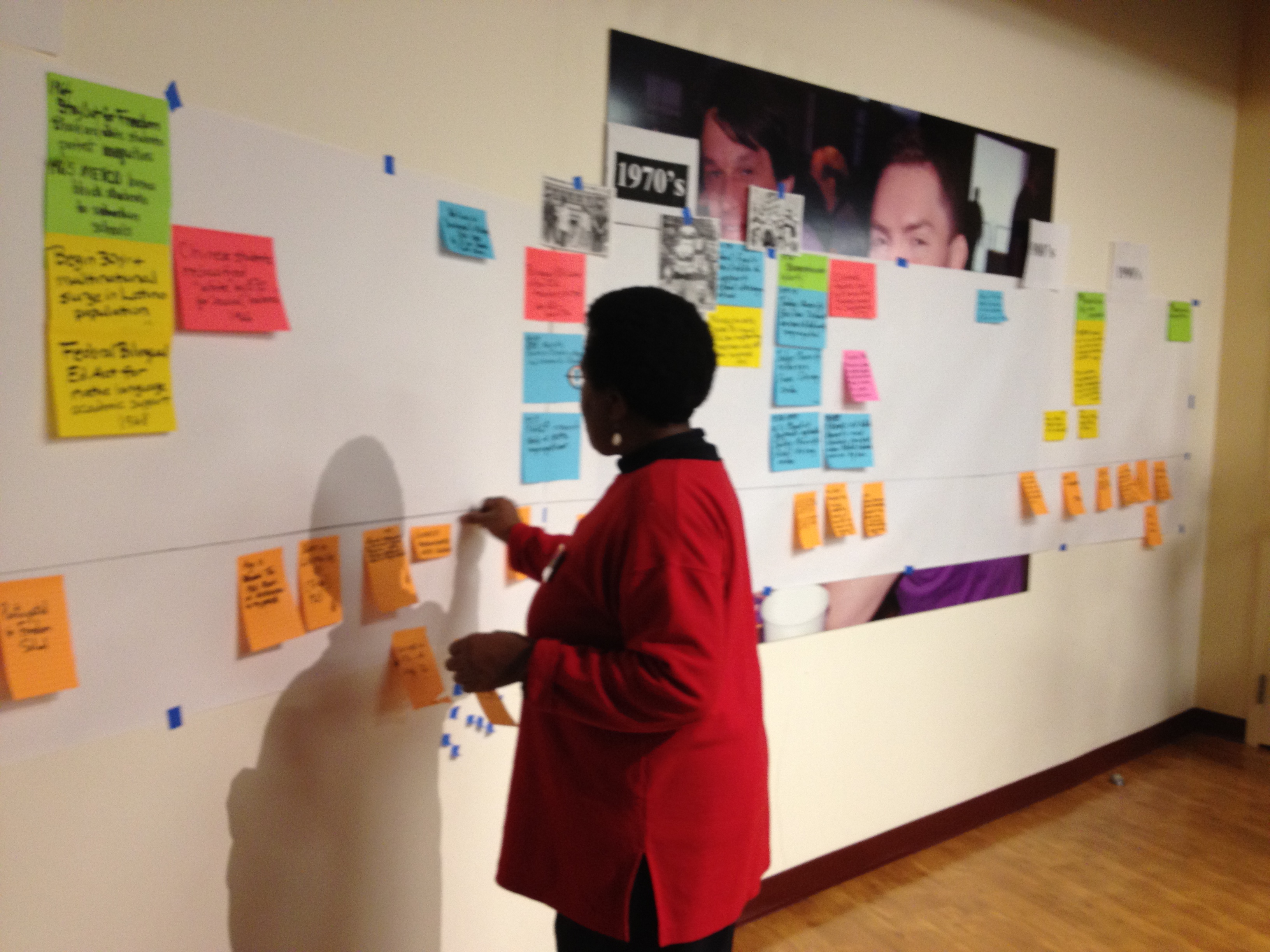
The day had three parts: beginning to lay out a shared vision of excellence, equity and access; mapping Boston’s collective “story” or history; and action planning. For the visioning piece, we asked the group two questions: What will Excellence, Equity and Access Look Like? and What would it take for us to get to Excellence, Excellence and Access? We grouped responses in the systems framework: internal/individual, interpersonal/inter-community, institutional and cultural.

We did the timeline as part of the story collection. We’re collecting personal stories about excellence, equity and access then and  now but equally important in this story collecting phase is collective stories of the history. At the gathering, we seeded the gathering with events provided by some Learning Network members .  Many thanks to Barbara Fields, Ty DePass, Suzanne Lee and Sharlene Cochrane (who drew from the timeline completed for us by the Civil Rights and Restorative Justice Project’s timeline that was done for us a t the beginning of BBDP) for their work seeding the history. The participants then filled in histories for four broadly defined racial communities as well as their own personal histories.

We understand (and were challenged about) how imperfect and inaccurate the use of racial categories is but given that we are trying to capture a time that was framed around “race” we used these groupings to get at histories from different community perspectives.  You can see the timeline developed at the gathering by clicking this link. We invite you to send us your additions or corrections by email or blog reply(we will continue to build this timeline although personal stories, questions and insights will only be added at events).

Finally, action plans were generated.  In reflecting on the timeline, participants set four major priorities: quality education, community development, economic development and anti-oppression. These groups will continue to work on these priorities. Please let us know if you are interested in being a part of a working group on any of these topics.