
In October, we blogged about joining the Community Coalition for Equity, Excellence and Engagement to ask the Boston Public Schools to put quality first as it reconsiders school assignment. As we have followed this process and listened to the many stakeholders involved, we and the Coalition believe that the focus should be on improving schools across the city rather than finding new ways to divide students among unequal schools.

Nonetheless, the  process has continued and very soon the Mayor’s External Advisory Committee is slated to make a recommendation to the BPS for a new school assignment plan. It is important that if the BPS does change how students are assigned to schools, they must fully consider the implications for equity, access and excellence, especially in light of Boston’s school assignment history.

On November 20th we’ll hold an update for the BBDP community and the Community Coalition for Equity, Excellence and Engagement to explain the school assignment plans under the consideration by the EAC. We’ll then think through what we can learn from Boston’s school desegregation and assignment history about the recommendations they are making. This session will be used to draft the BBDP’s response to the process and plans through a historical lens.

Oh, and it’s a potluck, so when you join us, don’t forget to bring a dish to share! Click here to register.

P.S. To see and participate in our evolving timeline of the struggle for excellence, equity and access click here. Also, it you have additions or corrections to the history please send them to BBDP!

Learning Network Gathering

Posted: November 12, 2012 by Donna Bivens in Uncategorized

For over a year, a Learning Network Planning Committee has been meeting to support the establishment and support of the BBDP Learning Network. On Tuesday, November 13 from 6:30-8:30 PM,  they will hold the first informal gathering of the Learning Network at UMN. These events will be places for sharing, for capacity building and for study and action.

For their first gathering the Learning Network Planning Committee invites you to come  tell, listen to, and share stories about your educational experiences.   Our focus will be on defining “excellent” education through our personal stories.  We plan to create a safe  setting, where we can break bread over a light, tasty meal, and build confidence as we listen to others and ourselves.

If you’ve come to an event and signed up or been involved in the project you are a part of the Learning Network that serves as a container to hold the project, a learning community and a resource pool and we welcome your participation. The Committee will be providing dinner for all who come so please register online  or call the office (Donna at 617-830-5085) if you’re able to attend.

Universities Partner in BBDP Story Collection

Posted: November 12, 2012 by Donna Bivens in Uncategorized

Since its beginning Boston Busing Desegregation Project has had tremendous support from universities. The story collection phase of the project is no exception!

Writing students from Chris Gallagher’s Northeastern University Masters-level class are collecting stories of those who impacted or were impacted by the busing/desegregation crisis. They also helped produce the summary of the phase one report. Students from Lesley University will also be adding to this effort.

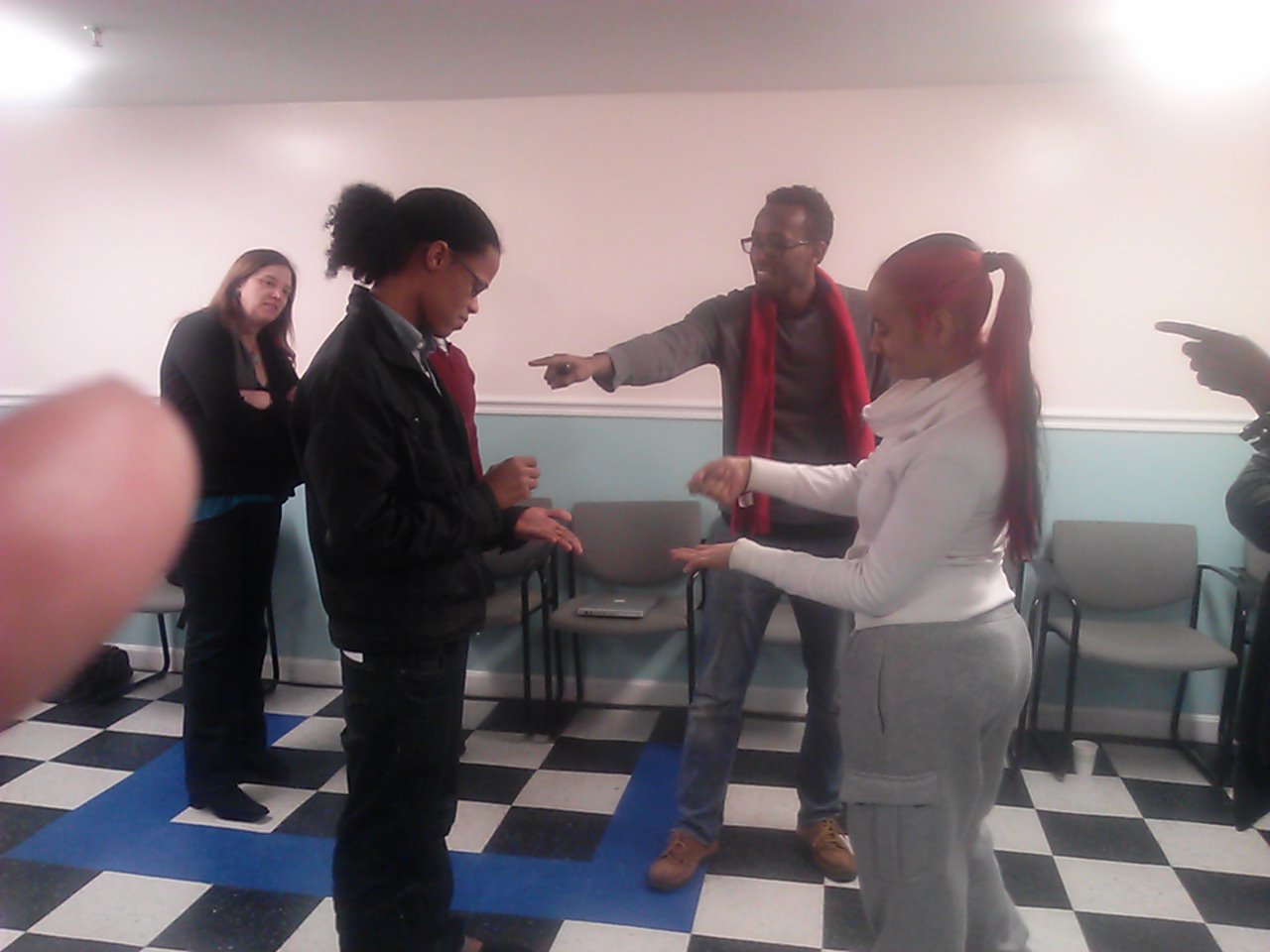
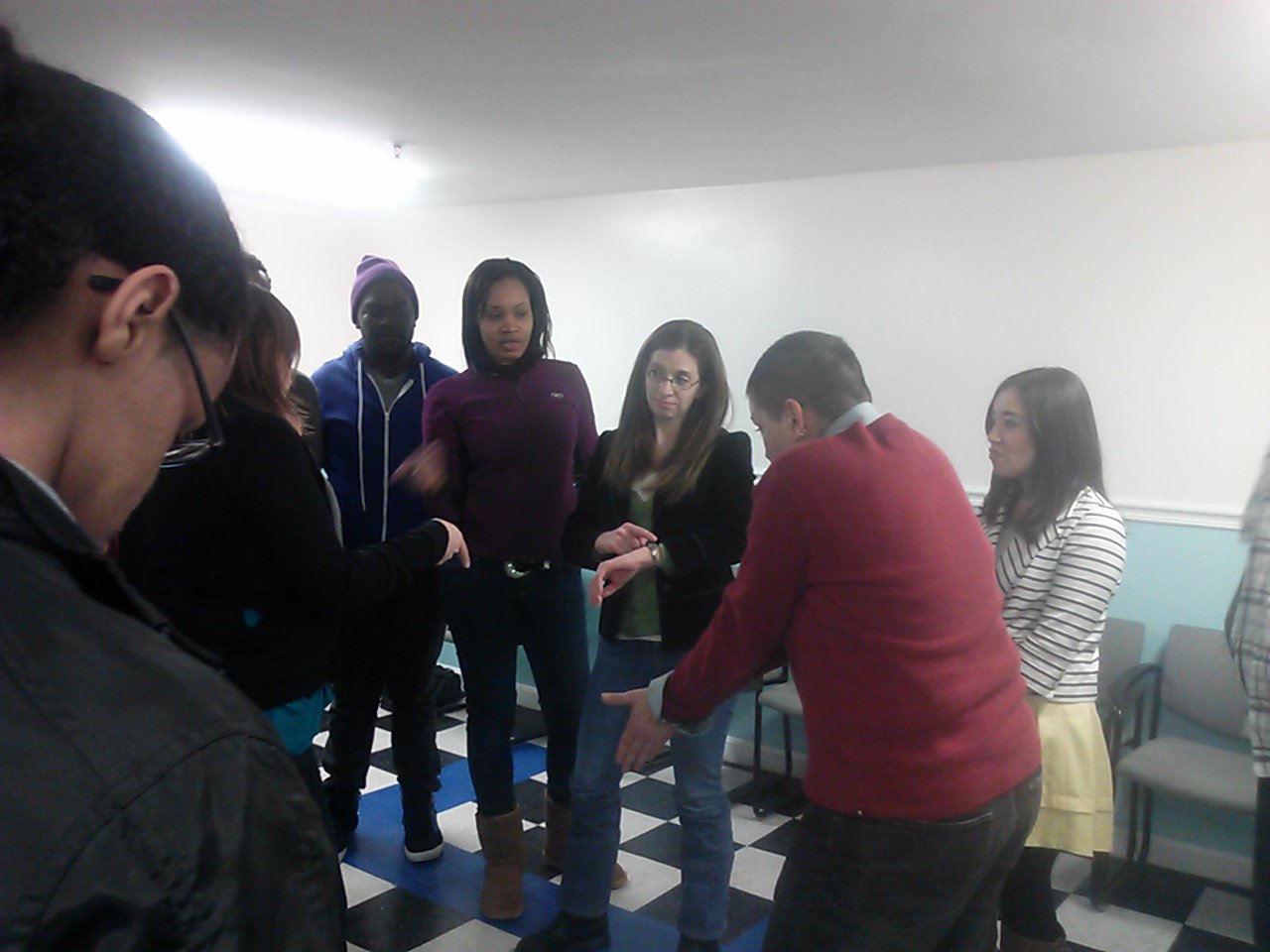
 University professor (and Steering Committee member) Gail Burton has involved her Roxbury Community and Emerson College theater students in using theater techniques with students, parents and teachers to help develop their BBDP stories. This fun, interactive approach is new for the Project. It offers great group building, creativity and opportunities for artistic expression. We encourage you to sign up if you are a teacher or parent.

As the story collecting continues and with the help of our partners, we look forward to offering many diverse ways of story telling and story collecting. We hope to see you at one or more!

2012 First Annual BBDP Gathering

Posted: November 8, 2012 by Donna Bivens in Uncategorized

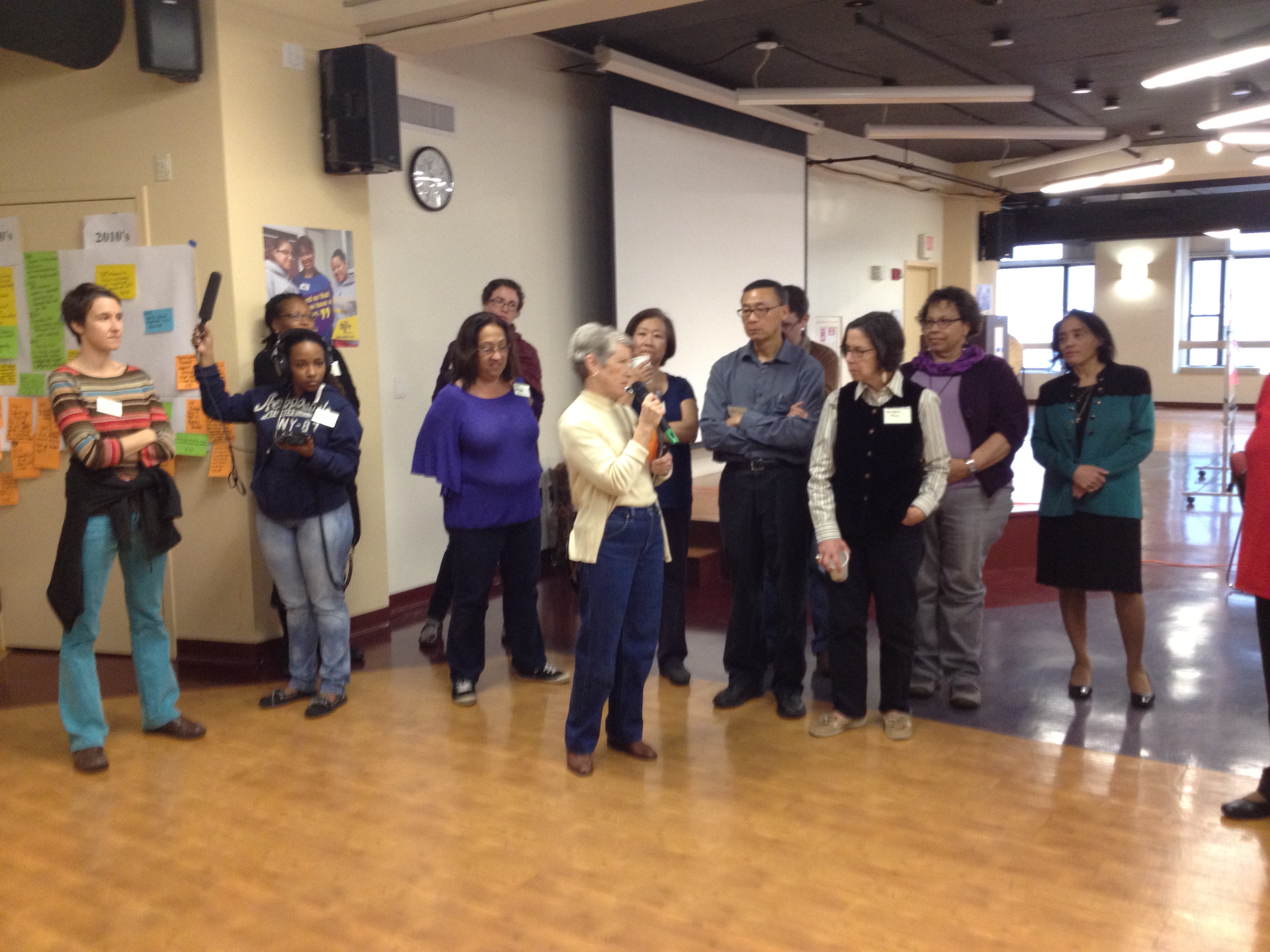
On October 27, a “small but mighty” group of Learning Network members came together to mark the end of the project’s first year and begin the work of the project’s second phase–storytelling and intra-community dialogues.

The day had three parts: beginning to lay out a shared vision of excellence, equity and access; mapping Boston’s collective “story” or history; and action planning. For the visioning piece, we asked the group two questions: What will Excellence, Equity and Access Look Like? and What would it take for us to get to Excellence, Excellence and Access? We grouped responses in the systems framework: internal/individual, interpersonal/inter-community, institutional and cultural.

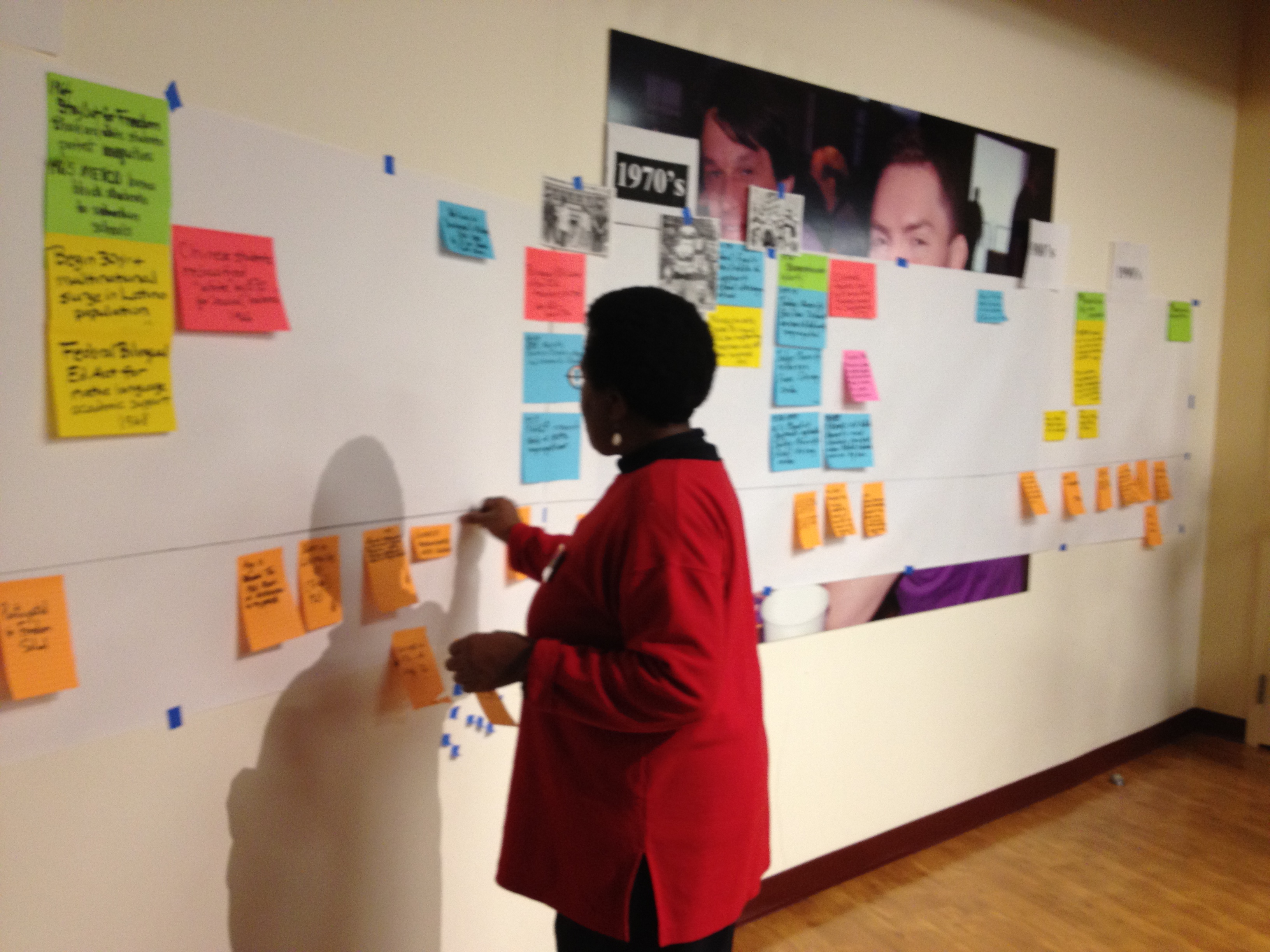
We did the timeline as part of the story collection. We’re collecting personal stories about excellence, equity and access then and  now but equally important in this story collecting phase is collective stories of the history. At the gathering, we seeded the gathering with events provided by some Learning Network members .  Many thanks to Barbara Fields, Ty DePass, Suzanne Lee and Sharlene Cochrane (who drew from the timeline completed for us by the Civil Rights and Restorative Justice Project’s timeline that was done for us a t the beginning of BBDP) for their work seeding the history. The participants then filled in histories for four broadly defined racial communities as well as their own personal histories.

We understand (and were challenged about) how imperfect and inaccurate the use of racial categories is but given that we are trying to capture a time that was framed around “race” we used these groupings to get at histories from different community perspectives.  You can see the timeline developed at the gathering by clicking this link. We invite you to send us your additions or corrections by email or blog reply(we will continue to build this timeline although personal stories, questions and insights will only be added at events).

Finally, action plans were generated.  In reflecting on the timeline, participants set four major priorities: quality education, community development, economic development and anti-oppression. These groups will continue to work on these priorities. Please let us know if you are interested in being a part of a working group on any of these topics.

Knowing that a 30 plus page report is a lot when everyone is swamped with work and the rest of life, a team of students of Learning Network committee member Professor Chris Gallagher have produced aSummary Report that captures some of the major findings in our Phase One report. We hope you will check out this Summary Report–especially if you’re coming to the gathering on October 27.

Please know that we still want to hear your feedback on the complete report when you have time to get to it.

Many thanks to Northeastern University students s Charlie Lesh, Haley Hamilton, Erin Frymire, Rachel Lewis, Michael Turner, Bryanna Parker, Kevin Ruby, Jacob Erickson, Kathryn Bloom, and Amanda Sherman who worked with Chris on the Summary. It is much appreciated. You did a fabulous job!

If you haven’t already, please register and attend the gathering this coming Saturday October 27 from 9 am to 3:30 pm at SEIU 615, 26 West Street downtown Boston.  A light breakfast and lunch will be served. Also, if you have childcare needs please call UMN at 617-830-5085.  We know it’s an extremely busy time of year but your presence is so needed and we hope to see you there!

BBDP Launches ‘What’s Your Story?’ Initiative

Posted: October 16, 2012 by meghandoran in Uncategorized

For a year and a half now we at the Boston Busing/Desegregation Project have been listening to stories – stories of the past, stories of he present, stories of pain and trauma, stories of succeeding and flourishing against odds, personal stories, and community stories. Through talking about Boston’s history, the busing/desegregation crisis, and issues of race and class segregation people have let us into their lives, which can be deeply personal but also highly illuminating. The BBDP works on the assumption that through listening to the stories and experiences of others we can both deepen our understanding of our history and connect our past struggles to today. Now, we are launching a project to formally record and share widely stories from Boston’s busing/desegregation crisis and its impacts from then until now.  There are three components to this project – three ways you can participate.

1. The Story Archive – through one-on one interviews we will collect individual stories, which will be recorded and transcribed for a searchable online archive. We’d like to collect at least 200 interviews in the coming year and plan to launch our online archive in May 2013. Have a story to tell? Email Meghan Doran to set up an interview.

2. Story Circles – Stories are not just about individuals – they are about bringing people together and listening to each other. We aim to have story circles in communities across the city this year. Email us to set up a story circle in your neighborhood.

3. Story Workshop series and Slam – Participants will learn to craft a five minute story to tell in front of an audience. Want to develop your story of Boston’s busing/desegregation crisis? Join us for this workshop series in January led by the talented folks at Massmouth

We can’t do any of this without volunteers! We need facillitators, interviewers, and transcribers/ Even a few hours of your time would be extremely helpful.  Contact us for more information about how you can help.

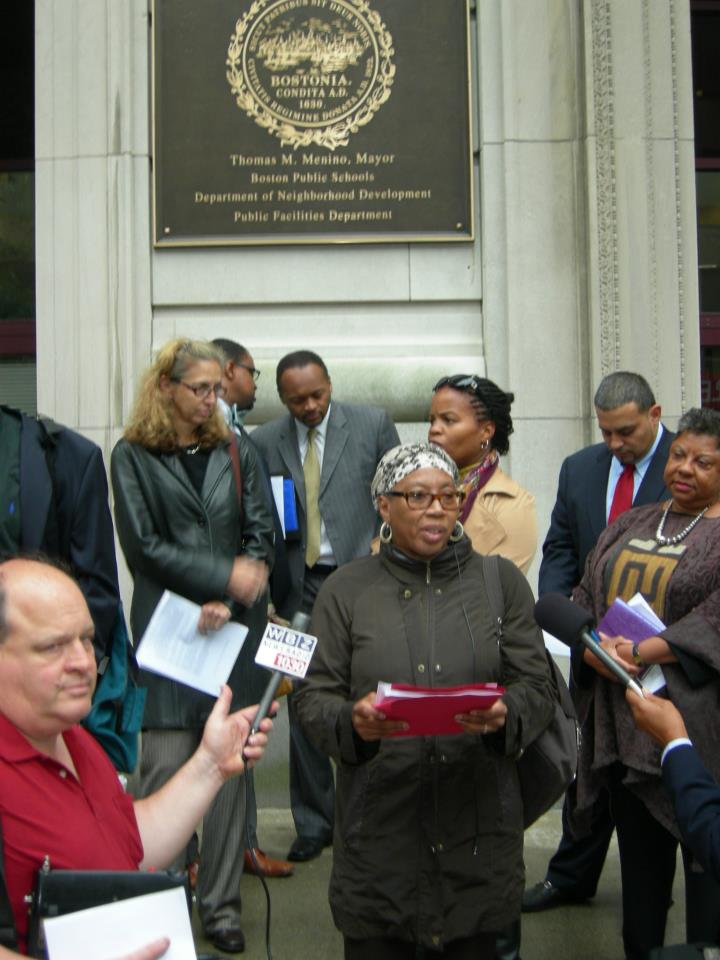
Since Mayor Menino announced that he wanted the Boston’s schools to adopt a plan which brought students closer to home back in January, we have been following the process very closely.  Now the Boston Busing/Desegregation project has joined with  community groups across the city in the Community Coalition for Equity, Excellence, and Engagement. This coalition is asking the BPS to slow down their process and put quality schools first. Want to know more? Read the Community Coalition Press Statement

At the coalition’s press conference our program director, Donna Bivens, had this to say:

When Bostonians look back at the crisis in education that occurred in the mid-70’s, we most often refer to it as “busing”. We do not recognize that “busing” was a school assignment process and it was a most a tactic. We do not consider the strategy of school desegregation that was meant to equalize resources and that that strategy needed to extend to race and economic segregation and inequities as well. And we do not consider the struggle for quality schools and education for all that was the ultimate goal. Today with well documented increasing racial and economic segregation in public education, we, through focusing on the tactic of school assignment rather than focusing on equitable access to excellent education for all stand poised to continue to misname of the problem

We have learned two lessons from listening to well over 2000 people reflect on Boston’s Busing/Desegregation crisis: no one has all the answers or knows the full story and everyone has something to bring to its development and conclusion—provided that is where our values lie. We have a unique opportunity to drop the “take no prisoners” politics of who has THE answer for Boston public schools and move to a “lose no passengers” collaboration and engagement that brings all our children to safety, to equal opportunity to learn, and to a school system that prepares them to be contributors and global citizens ready to face the challenging future that awaits them.

We also recently put out a statement on our involvement with the coalition and the lessons we think we can take from our past for today.

There are lots of things you can do as a part of the BBDP learning network or a concerned community member:

– Attend a community/External Advisory Committee meeting. Visit  http://bostonschoolchoice.org/ to stay up to date about community meetings. Be sure to listen, ask questins, and let the BPS and community know how you feel.

– Attend our Community Gathering on Equity, Access and Excellence, where we will link this history to what is going on in the city today, including with school assignment.

– Participate in Our What’s Your Story? Initiative. By telling your story you help us continue to broaden the narrative about Boston’s history and make concrete links between what happened then and our needs today.

– A group participating in our coalition, QUEST  (Quality Education for Every Student), has a petition circulating asking the BPS to slow down their process: http://signon.org/sign/a-petition-to-stop-the

– Stay informed; here are some recent articles about the process:

Greetings!

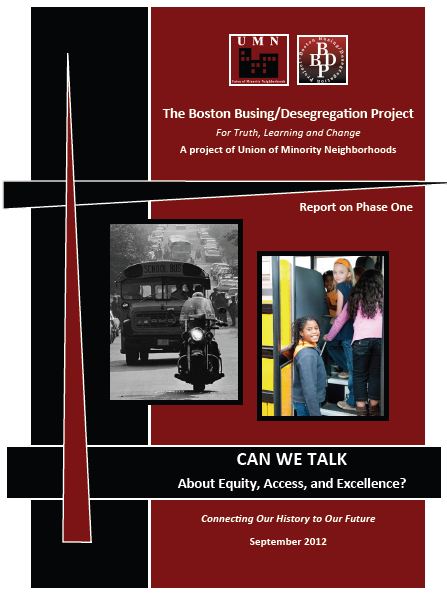
We hope you had a wonderful summer. We are excited to share with you Can We Talk about Equity, Access and Excellence: Connecting Our Past to Our Future, a report on the first phase of the Boston Busing/Desegregation Project.

This report is our attempt to synthesize all we heard and learned in this Phase of the Project which:

  •  raised awareness of the Project,
  • built a Learning Network and
  • began looking at the context for the crisis –its history, meaning and relevance for today–from the perspective of diverse communities.

There is a lot in the report but if you do not hear your voice, we strongly encourage you to talk back:  to share your agreements and disagreements and to add what’s missing in the spirit of truth-seeking and learning and change at the heart of this Project.

Also, please come to our first annual gathering on October 27 to move from what the learning of this report to next steps. Details to follow!

Exploring Equity, Access and Social Justice

Posted: August 15, 2012 by Donna Bivens in Uncategorized

Earlier this summer, BBDP represented Union of Minority Neighborhoods –in making a presentation to the External Advisory Committee on Improving School Choice (EAC). Our program Equity, Access and Social Justice included a film clip of Can We Talk?  followed by six wonderful speakers:  educator Dr. Theresa Perry, community activist Carmen Pola, historian Dr. James Green, education activist Gina Chirichigno, BPS Achievement Gap director Dr. Carroll Blake, and special education advocate Toni Saunders. The panelists explored the many aspects of equity and access in public school education paying special attention to race and class disparities (see videos below). After the presentation, EAC and community members engaged in a lively discussion of the issues raised. (see notes from this discussion and the journaling on the film clip here)

Not surprisingly, many equity, access and quality education themes and conflicts that came up during the desegregation crisis of the 70’s continue to present themselves—for example,  issues of the conflict between “neighborhood schools” and equal access to quality schools, questions of whether equity is possible when the economic and social resources of different communities are so unequal, demands for  culturally appropriate curricula and instructors, disparities of expectations for learning based on race or class, etc.  Moreover, Gina Cirichigno of One Nation Indivisible made a presentation on the nationwide trend toward race and class resegregation and deepening disparities.  These minefields are not unique to Boston. They echo from the past because they are systemic and grounded deep in our history.

While many of the EAC members were unable to attend due to summer schedules, those present found the panels and the discussion to be helpful and very relevant to their work looking at equity and access issues in the school assignment process.  The EAC discussed this program at its July 16 meeting.

All seemed to agree that these issues will not go away with any new assignment plan or any one reform measure. These are issues for the long haul and BBDP and UMN  look forward to continuing to working with the many stakeholders  committed to grounding  in our history in order to address the systemic barriers to equity and access to quality public education for all.

Latino Convening and Bilingual Education

Posted: July 6, 2012 by meghandoran in Uncategorized

In early June we partnered with Inquilinos Boricuas en Accion to hold a conversation about the Latino experience in the Boston busing/desegregation crisis. Miren Uriarte, director of the Gaston Institute at UMass Boston and member of the Mayor’s External Advisory Committee on school choice, started the conversation  with the historical context in the Latino community (see her Powerpoint here.)

http://www.youtube.com/watch?v=EVntYKQtydA&feature=youtu.be

Long time community activist Carmen Pola then shared her experience as an activist during school desegregation, followed by former BPS teacher and Teacher Activist Group founder Jose Lopez, who talked about the situation in the schools today.  Click here to see our report from the evening.

That same week we had the pleasure of seeing a play at the Rafael Hernandez school that chronicled the school’s history. A citywide bilingual (English/Spanish) K-8 school, the Hernandez  was born out of Latino parents and activists’ struggle for education. The play, which featured elders Carmen Pola and Jeannie Dunn (a community activist and retired BPS teacher) along with each class in the school, started by illustrating Boston’s busing/desegregation crisis and the struggle for bilingual education. We were thoroughly impressed about how the school and its young people rooted their understanding of today through history in this play. Unfortunately, the Hernandez is one of the few schools in the city and even the state today that centers around bilingual education, largely due to Massachusetts’ English only law, despite the enduring popularity of bilingual programs.