The Power of Story

Posted: June 27, 2012 by meghandoran in Uncategorized

As we gear up over the summer to launch phase 2 of the Boston Busing/Desegregation Project,  we are thinking a lot  about how people tell their stories. We’ve heard so many powerful stories since we began this work, and now we are thinking about a more formal process for collecting those stories and using stories to make change.

In the video below Kelley Creedon explores  how breaking the silence through telling stories  can lead people to make change, an idea that is central to the work we are doing here. This TED talk makes a great companion to an earlier talk we posted on the danger of a single story AND it features an organization doing great work here in Boston – City Life/ Vida Urbana, whose executive director, Curdina Hill, is on our Steering Committee.    So, once again we want to know: what’s your story?

Community Convening in Chinatown

Posted: June 21, 2012 by meghandoran in Uncategorized

At the end of May we teamed up with the Boston Chinatown Neighborhood Center and the Chinese Historical Society of New England to continue our community convening process.The panel was moderated by Stephanie Fan, a retired BPS teacher and administrator who framed the evening with a presentation on Chinatown and Boston schools. We then heard from three panelists: Suzanne Lee spoke on her experience as a teacher and then principal in the BPS, Elaine Ng spoke on her experiences as a student in the Boston Public Schools in the 1970s and Jessica Tang spoke on her experiences as a BPS teacher today. What emerged from the panel and audience discussion was a wide ranging discussion on this history and how it is connected to the issues we face in our schools and city today. See the video of the panel below and read the full report here.

http://www.youtube.com/watch?v=x07M46mfPRw

Traditional stories of the Boston busing/desegregation crisis pit white against black, anti-busing against pro-busing, and neighborhood against neighborhood. In reality we know there was racism across the city, but that there were also people who took stands against racism, regardless of their color, position on busing or neighborhood they lived in. Some of these folks were, for example,  white, anti-busing, and born and raised in South Boston. They were young and old, activists, parents, bystanders, politicians etc. Throughout the past year we’ve met many white people from across the city who tried to take a stand in the 1970s in some big or small way and feel frustrated that their story is not a part of the narrative of what happened. We decided to hold an event to focus on the experiences and communities of a variety of white people who didn’t like the racism they saw around them at the time and the things they responded in their communities to the crisis.  We classified this group as ‘allies for racial justice’ although as one participant pointed it, this isn’t language that was used then, ad man people never considered themselves in this vein.

As a part of our context setting we asked participants four questions:

  1. What were the challenges, struggles, strategies and strength of white people who believed in racial justice in Boston leading up to this time?
  2. What was the state of relationships between white allies for racial justice and the various communities of greater Boston? What history had shaped these relationships?
  3. How were white allies for racial justice interacting with local institutions (school, government, business and finance, etc.)? (e.g. How were they positioned both inside and outside these institutions?) What history was this grounded in?
  4. What was happening culturally in Boston’s communities during that time period (e.g values, politics, arts, families, class, etc.)? Where did white allies for racial justice fit into this?

What ensued were some lively and very informative discussions. Click here to read the notes from this event and lease feel free to add your voice to this conversation by commenting below!

Marvin Johnson on the Transitions Model

Posted: May 31, 2012 by meghandoran in Uncategorized

If you’ve been to one of our events, chances are you’ve heard us present on the William Bridges Transitions model as it applies to Boston and it’s busing/desegregation crisis. The BBDP recently hosted our transitions coach Marvin E. Johnson of the National Center for for Alternative Dispute Resolution to have a more in-depth conversation with us to think about how this framework applies to our work and how we can use it going forward.  Below is an excerpt of this conversation with BBDP staff and learning network members, along with the slide being referenced through the talk.

http://www.youtube.com/watch?v=5y27L_Ikm0w&feature=youtu.be

We are excited to announce that the Boston Busing/Desegregation Project’s first film Can We Talk? Learning from Boston’s Busing/Desegregation Crisis was accepted in the Roxbury International Film Festival. This film by Scott Mercer of Mercer Media Relations has been core to the project. It was key this past year to opening up conversation about the period and inviting people and communities into the project.

Our festival screening is scheduled to be held at Blackman Auditorium at Northeastern  University on Saturday, June 16 at 3:15pm. The festival  lineup  sounds great! We hope to see you there. Hear director Scott Mercer discuss the film and the Project on WBUR.

How can we integrate public schools when neighborhoods have become more segregated? Is it time to bring back busing? What other options and solutions are out there for providing a quality education for all children? These are the questions the New York Times posed this week in its Room for Debate section. Along with Pedro Noguera, Michelle Rhee and others, BBDP Project Director Donna Bivens was invited to weigh in. Donna originally submitted a piece outlining some of what we learned at the National Coalition on School Diversity conference last week, but was asked to  submit a more personal narrative. We liked the original piece so thought we’d share both with you.  Click here to read the piece published in the Times and see below for the original submssion.

____________________________________________________________________________________________________

In Boston, we’re beginning a process to seek truth about and learn from our 1970’s “busing”/ desegregation crisis. We’re seeking to better understand what worked and what didn’t work and for whom. Wha twe’ve found is a tangled web of race and class, power and values that didn’t get—and couldn’t be—sorted out back then that continues to haunt us and pull us back today.

There are some important lessons that we can learn from earlier attempts at school integration. Here are a few things we’re exploring in Boston. First, for some integration is only one tactic of many to achieve the goal of quality education for our children. For others, integration is in and of itself a value and goal. And for still others, it is something they fear deprives them of value, meaning, control, or even community. It is important in our discussions about how to achieve integration that we are clear about why we are striving for integration, what outcomes we are seeking and how we are tending each other across our differences.

Second, school integration cannot be relied on to solve larger problems of racial and socioeconomic inequity. It cannot alone deliver equity in an increasingly inequitable nation. And if it is held to such a standard, it will always fall short.

Finally, integration cannot be simply a numbers game. To achieve integration where there is segregation we must bring systems together intentionally and with care, paying careful attention to dynamics of race, class, and power among individuals and between communities.

It is only when we openly and honestly grapple with our values, goals and visions regarding racial and economic integration and educational equity and excellence that we can achieve truly integrated school systems that produce high quality education for all.

What was the impact of Boston’s school desegregation crisis? This is a question we are constantly facing through our work and one to which we continue to hear many answers. Some talk about their personal lives and trajectories, others about their communities and others about the city an its institutions. In this article, Professor James Green from UMass Boston takes on this question, arguing that we have to understand education activism through the sixties and seventies to understand what happened to the schools in the wake of school desegregation, challenging what he calls the myth of the ‘good old days’ before busing.  What do you think? Is there a myth about the schools and the city before school desegregation? What have been some of the positive outcomes of school desegregation?

Beth Roy on Race, Class, Listening and Emotions

Posted: April 26, 2012 by meghandoran in Uncategorized

On Thrusday April 20th sociologist and radical therapist Beth Roy gave a talk at Northeastern University for our Learning Network entitled “Listening for Race and Class.” As only  the second capacity building event we’ve held for our learning network (the first was when Eduardo Gonzalez spoke to us about truth commissions last July), we weren’t quite sure what to expect. We were thrilled when over 90 people joined us for this interesting and engaging talk.

Audience members at Beth Roy’s talk engage in a ‘deep listening’ exercise where they tell and listen to stories about schooling.

We got a lot of interesting and engaging insights from the audience for the project based on the talk, which we will find a way to summarize here soon. After you watch the excerpt below, be sure to tell us what you think!

Ms. Roy also returned the following day to talk to BBDP leadership (staff, committee members facillitators, etc) in more detail. We had an exciting three hour discussion with her based on questions the audience had detailed from the previous evening. She went further into the ‘theory of nested conflict’ as we discussed how to engage both individuals and groups in this work in a meaningful way. In all, this was a great visit, and we are looking forward to upcoming capacity building events with our network.

As the Boston Busing/Desegregation Project unfolds, we want to stay true to our tagline of truth, learning and change.   All of us who have been a part of the project have learned a tremendous amount already. There is so much scholarship on the era, huge archives of historical records, many events that looked back at the era and countless stories and perspectives that may have been overlooked or unexamined. The learning part of the Project is to engage all these wonderful resources and come to new understandings.

To that end, we are going to start sharing an article or other resource each month that has stood out to us for its power in deepening our understanding. The first article we’re sharing is From Racial Liberalism to Racial Literacy : Brown v. Board of Education and the Interest-Divergence Dilemma by Lani Guinier. This article has been foundational for us because it so clearly articulated the complexity we’ve been encountering as we’ve tried to understand Boston’s desegregation crisis and put it in a larger historical and political perspective.

It’s a pretty academic article but it echoes so much of what we’ve heard directly or indirectly during our quest to better understand the crises that have come with our nation’s going from a legally segregated public school system to a legally desegregated one. While we know this isn’t the only dynamic that must be considered to understand the Boston busing/desegregation crisis, it is surely a major presenting one that is key to setting the context for the crisis.

Since this is a pretty intense academic article, we’ve pulled out some quotes to give you an overview of the article and perhaps, guide your reading. We’d love to hear your thoughts, questions, insights about what’s written here. Feel free to add your comments to the blog or to be in touch with us by phone or email. We look forward to hearing from you!

BBDP featured on WBUR

Posted: April 3, 2012 by meghandoran in Uncategorized

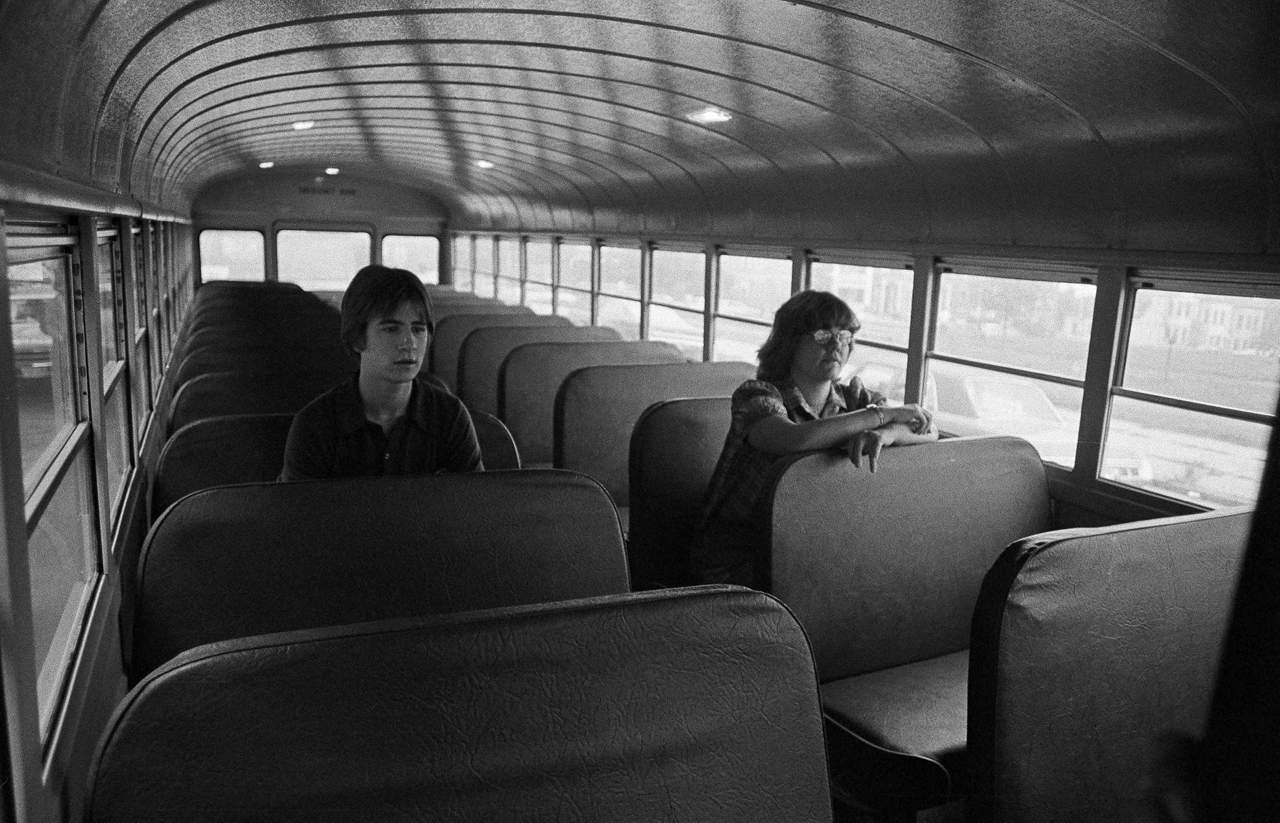
A recent story on WBUR discusses the anniversary of the court filing, tells a few stories of individuals who were bused and talks about the Boston Busing/Desegregation Project. Take a minute to hear some of our staff members, Meghan and Donna, talk about the pain people experience in revisiting this era. Also, we highly recommend looking at the slideshow of photos from the era – they are every bit as powerful as the stories Delores records.